

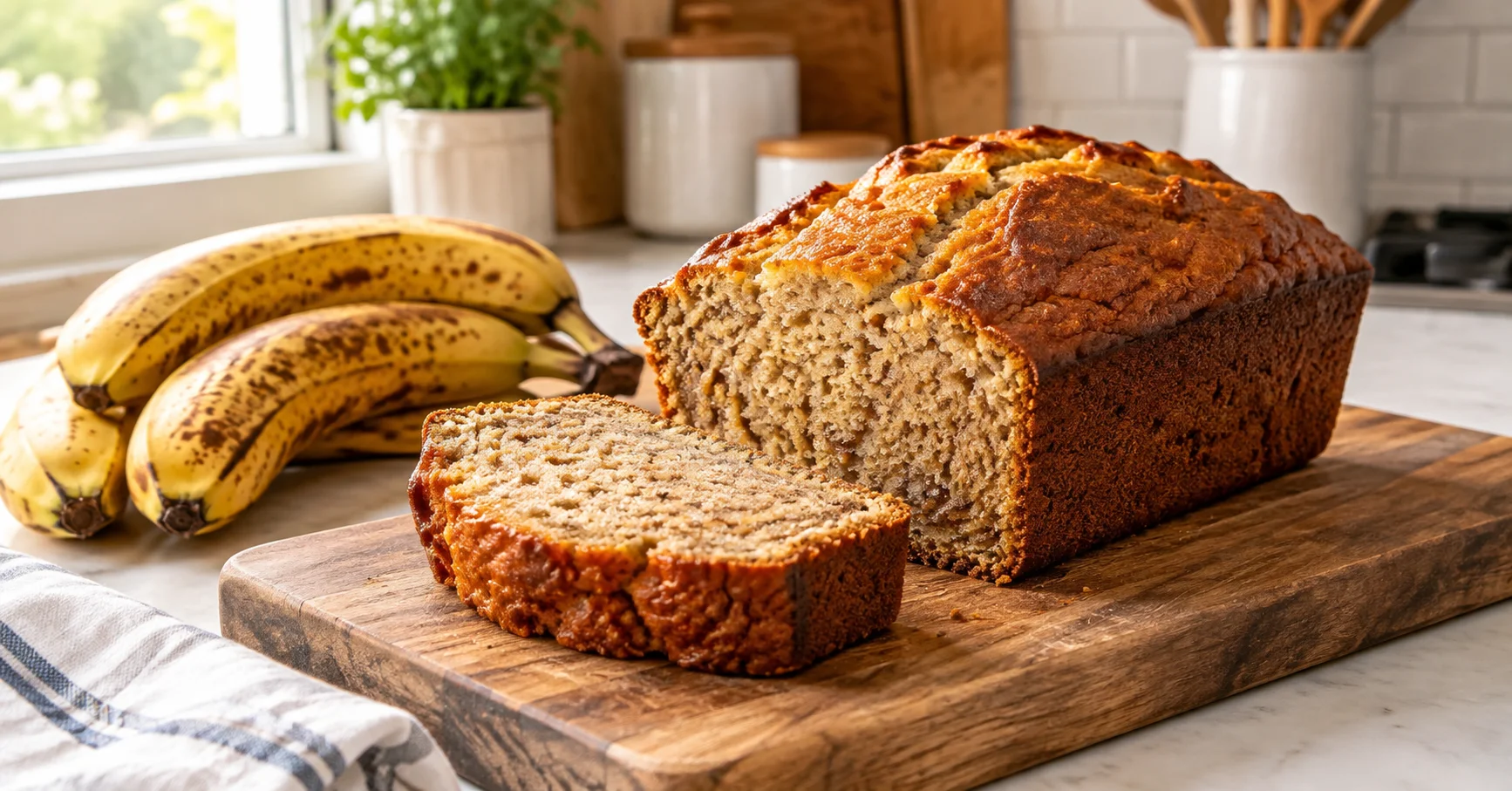
If you are looking for the banana bread at work dude original, you likely want the simple recipe and familiar taste behind this popular homemade loaf. This version focuses on ripe bananas, everyday baking ingredients, and an easy method that works well for home bakers in the USA. The short answer is that this recipe combines mashed bananas, butter, eggs, flour, sugar, and basic baking essentials to create a soft, flavorful loaf. In this guide, you will learn its background, ingredients, preparation steps, baking details, and common questions.
What Is Banana Bread at Work Dude Original?
The banana bread at work dude original is a classic homemade banana bread recipe known for its simple ingredients and familiar homemade taste. It focuses on ripe bananas, basic pantry ingredients, and an easy baking method that creates a soft, moist loaf.
This recipe is especially appealing to home bakers who want an original recipe without complicated steps. The result is a tender banana loaf with a rich banana flavor and a lightly golden outside.
Where Did the Original Banana Bread Come From?

Banana bread became popular in American home kitchens during the 1930s. Home cooks found a useful way to turn very ripe fruit into a baked treat instead of throwing it away.
The idea continued to grow as baking became easier and common pantry items became widely available. Recipes often used mashed bananas, flour, sugar, eggs, butter, and baking soda.
Over time, many versions appeared, but the basic idea stayed the same. The original banana bread recipe is built around simple preparation and the natural sweetness of ripe bananas.
What Makes the At Work Dude Original Recipe Different?
The main appeal of the at work dude banana bread is its straightforward approach. It does not need unusual ingredients or complicated baking techniques.
The focus stays on getting the right texture and strong banana taste from simple ingredients. Using ripe bananas gives the bread natural sweetness and helps create a soft crumb.
For someone looking for a classic banana bread recipe, this style is easy to understand and practical for a home kitchen. The method also leaves room for careful measuring, which is important when trying to reproduce the original recipe.
Original Ingredients Used in the Recipe

The banana bread ingredients are simple and easy to find in most American grocery stores. The recipe uses everyday baking staples that work together to create a balanced homemade loaf.
The basic ingredients include all purpose flour, granulated sugar, brown sugar, melted butter, eggs, vanilla extract, baking soda, and salt. Ripe bananas provide the main flavor and moisture.
The bananas should be soft and well ripened. Overripe bananas are particularly useful because they are naturally sweeter and easier to mash.
How to Make Banana Bread at Work Dude Original

Start by gathering the ingredients and preparing a loaf pan. Preheat oven settings should be checked before mixing so the batter can go into a properly heated oven.
Mash the bananas in a mixing bowl until mostly smooth. Add the wet ingredients and combine ingredients carefully without overmixing.
Next, add the dry ingredients and gently mix the batter until everything is just combined. The finished mixture should be thick and smooth enough to pour batter into the prepared loaf pan.
Bake until golden brown, following the original measurements and baking temperature for the recipe. A toothpick test can help check whether the center is fully baked.
The homemade loaf should have a golden brown crust while remaining soft inside. Once the baking time is complete, the bread can be allowed to cool before slicing.
Step by Step Original Recipe
Now that the basic preparation is clear, the next part is putting everything together in the right order. Good banana bread does not require advanced baking skills, but each step matters for the final texture.
Begin with fully softened bananas. Place them in a large bowl and mash them well with a fork or potato masher. A few small pieces are fine because they can add little pockets of banana throughout the finished bread.
Add the melted butter to the mashed fruit and stir gently. Then add the eggs and vanilla extract. Mix until the wet mixture looks even and smooth.
In a separate bowl, measure the flour, sugar, baking soda, and salt carefully. Accurate measuring is important because too much flour can make the finished bread heavy, while too little can leave it weak and difficult to slice.
Add the dry mixture to the bowl with the wet mixture. Stir slowly until there are no large areas of dry flour remaining.
Do not keep stirring once the mixture comes together. Excessive mixing can affect the texture and make the finished loaf less tender.
Prepare a standard loaf pan by lightly greasing it. Pour the mixture into the pan and spread the top gently with a spoon or spatula so it is fairly even.
Place the pan in a fully heated oven. Keep the oven door closed during most of the baking process because opening it too often can cause the center to sink.
As the bread bakes, the top should gradually become golden brown. The center needs enough time to cook completely, so color alone should not be used to judge whether it is ready.
Insert a clean toothpick into the center near the end of baking. If it comes out with only a few moist crumbs, the loaf is generally ready. If wet mixture sticks to it, allow the bread to bake for a little longer.
Remove the pan from the oven and let the bread rest before cutting. This cooling period allows the inside to finish setting and makes cleaner slices possible.
What the Original Banana Bread Looks and Tastes Like
A properly baked loaf has a rounded top with a golden brown surface. The outside should look firm, while the inside remains soft and moist.
The center should not look wet or gummy. Instead, it should have a fine, tender crumb that holds together when sliced.
The flavor is centered on ripe banana. It should taste naturally sweet with a mild buttery richness from the other ingredients.
The crust provides a slightly firmer contrast to the soft center. This difference between the outside and inside is one of the familiar features people expect from traditional homemade banana bread.
The finished texture should also feel light enough to bite easily. It should not be dry, crumbly, or overly dense.
A strong banana aroma is another useful sign. When the loaf is fresh, the smell should be warm and sweet without being dominated by any single ingredient.
The appearance can vary slightly from one kitchen to another. Differences in banana size, oven performance, pan material, and baking time can all affect the final loaf.
For the closest result to the original version, following the ingredient quantities and preparation order carefully is more useful than making unnecessary changes.
Original Recipe Measurements and Baking Details
Measurements are important when making this recipe because small changes can affect the balance between moisture, sweetness, and structure.
For the most consistent result, measure flour by spooning it into a measuring cup and leveling the top. Scooping directly from a packed container can add more flour than intended.
The bananas should be measured after peeling and mashing. This gives a more consistent result than relying only on the number of bananas because fruit size can vary.
Butter should be melted and allowed to cool slightly before it is mixed with the other ingredients. Very hot butter can change the mixture and may affect the eggs.
The loaf pan should be filled without reaching too close to the top. Leaving enough space allows the bread to rise while baking without overflowing.
The oven should be fully preheated before the pan goes inside. A cold or partially heated oven can change the expected baking time and affect how the bread rises.
Baking time can vary depending on the oven and the type of pan being used. A metal pan, glass pan, and darker pan may not produce exactly the same result.
Begin checking the loaf toward the later part of the expected baking period rather than opening the oven repeatedly. Look for a firm top, an evenly browned surface, and a toothpick that comes out without wet batter.
If the surface becomes brown before the center is finished, the bread can be protected loosely with foil while it continues baking. This helps prevent the top from becoming too dark.
Once baked, allow the loaf to cool in the pan for a short period. Then transfer it to a cooling rack so air can circulate around the sides and bottom.
Cutting the bread while it is extremely hot can cause the center to appear less firm and can make the slices fall apart. Waiting until it has cooled makes the texture easier to judge.
Common Questions About Banana Bread at Work Dude Original
What is banana bread at work dude original?
Banana bread at work dude original refers to the original style of the recipe built around ripe bananas and familiar baking ingredients. Its appeal comes from a simple preparation method and a traditional homemade result.
Why should the bananas be very ripe?
Very ripe fruit contains more natural sweetness and has a softer texture. This makes it easier to incorporate into the mixture and gives the finished bread a stronger banana taste.
Can I use bananas that are not very ripe?
You can, but they may not provide the same sweetness or softness. Less mature bananas are usually firmer and can have a milder flavor.
Why did my banana bread turn out dense?
One common reason is overmixing after the flour is added. Another possibility is using too much flour. Measuring carefully and mixing only until the ingredients come together can help.
Why is the middle still wet?
The center may simply need more time in the oven. Oven temperature, pan size, and the amount of moisture in the fruit can all affect how quickly the middle cooks.
How do I know when the loaf is fully baked?
Look for a firm, browned top and test the center with a toothpick. The toothpick should not have wet batter on it. A few soft crumbs are normal.
Can I make the recipe without brown sugar?
Changing an original recipe can change its flavor, moisture, and texture. If your goal is to reproduce the original result, keeping the listed ingredients and quantities is the safer approach.
Should melted butter be hot when added?
It should be melted but not extremely hot. Letting it cool slightly before combining it with the other ingredients helps keep the mixture balanced.

Muhammad Ali writes about baking and recipes at kitchinfo. He researches techniques from trusted bakers, cookbooks, and culinary experts, and turns them into clear, step-by-step guides . so bakers of every skill level can get great results without the confusion.