

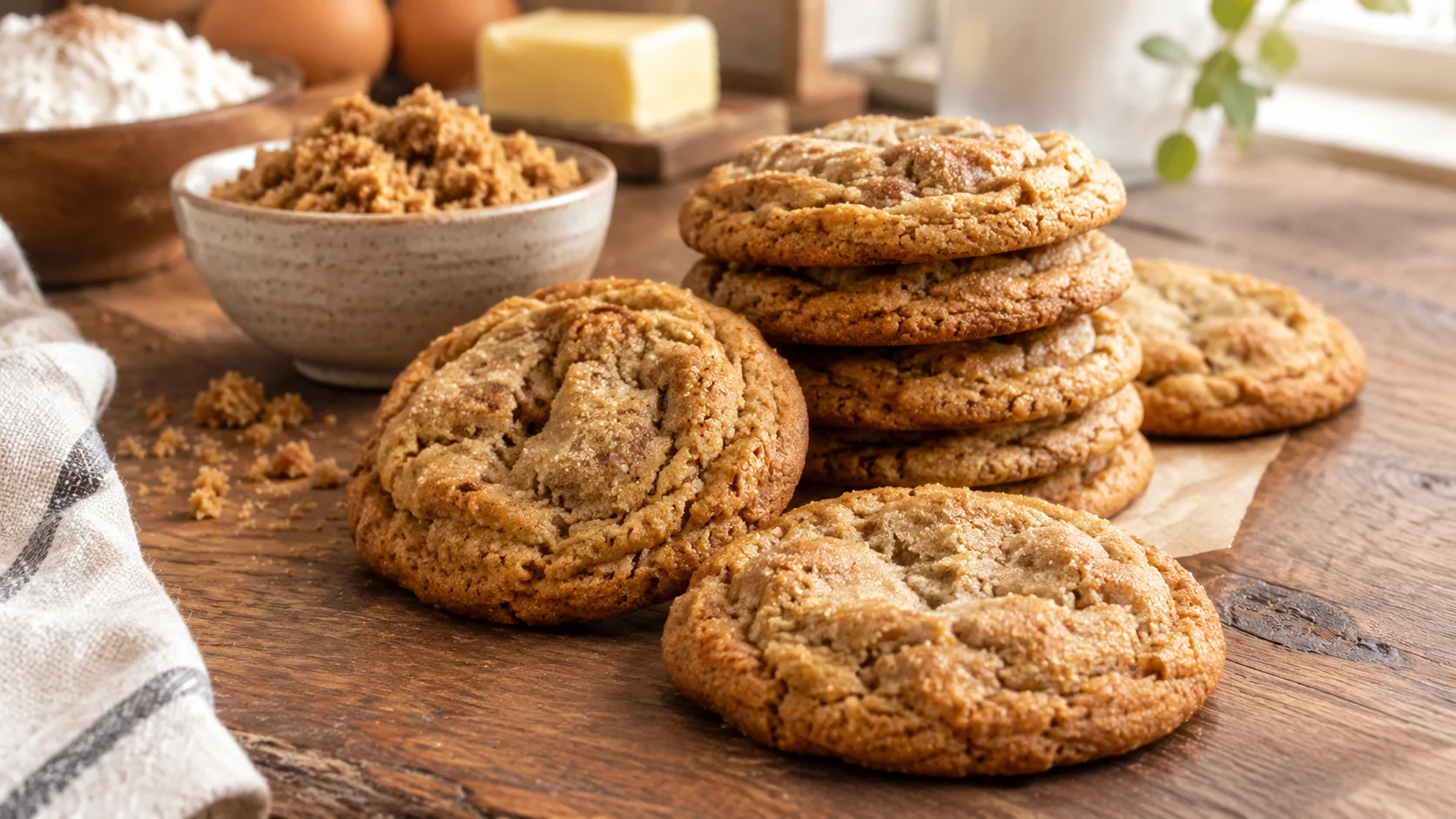
If you want soft, chewy, buttery cookies with a rich caramel-like flavor, these brown sugar cookies are an easy recipe to make at home. Brown sugar gives the cookies a deeper flavor and helps create a soft, moist center while the edges become lightly crisp as they bake. You only need simple baking ingredients, and the dough comes together without complicated steps. These cookies are especially good when you want a classic homemade treat that tastes rich without needing a long list of ingredients.
Brown Sugar Cookies
These cookies are all about the flavor and texture that brown sugar brings to a simple cookie dough. Unlike cookies made mostly with white sugar, brown sugar contains molasses, which gives it a warm caramel flavor and helps keep the finished cookies tender.
The recipe works especially well with light or dark brown sugar. Light brown sugar gives the cookies a mild caramel taste, while dark brown sugar creates a deeper molasses flavor and a slightly richer color.
For the best texture, avoid overbaking the cookies. They may look slightly soft in the center when they come out of the oven, but they will continue to set as they cool.
Ingredients
- 1 cup packed brown sugar
- 1/2 cup unsalted butter, softened
- 1 large egg
- 1 teaspoon vanilla extract
- 1 3/4 cups all-purpose flour
- 1/2 teaspoon baking soda
- 1/4 teaspoon salt
How to Make Brown Sugar Cookies
Start by preheating your oven to 350°F (175°C). Line a baking sheet with parchment paper so the cookies do not stick and are easier to remove after baking.
In a large mixing bowl, beat the softened butter and brown sugar together until the mixture looks smooth and creamy. This step helps combine the butter and sugar evenly and contributes to the final cookie texture.
Add the egg and vanilla extract. Mix until everything is well combined. Scrape the sides of the bowl if needed so the ingredients are evenly incorporated.
In a separate bowl, whisk together the all-purpose flour, baking soda, and salt. Gradually add the dry ingredients to the wet mixture. Stir just until a soft cookie dough forms. Avoid mixing the dough for too long because overmixing can make the cookies less tender.
Scoop portions of dough onto the prepared baking sheet. Leave enough space between each cookie because the dough will spread during baking.
Bake for about 9 to 12 minutes, depending on the size of the cookies. The edges should look set and lightly golden while the centers should still look slightly soft.
Remove the baking sheet from the oven and allow the cookies to cool for several minutes. Once they have firmed up slightly, transfer them to a wire rack to cool completely.
Why Brown Sugar Makes These Cookies So Good

Brown sugar is more than just a sweetener in this recipe. Its molasses content affects both the flavor and texture of the cookies.
The molasses adds a warm, slightly caramelized taste that makes the cookies more flavorful than a basic sugar cookie. It also helps retain moisture, which is one reason brown sugar cookies can have a soft and chewy texture.
Brown sugar also gives the cookies a naturally golden-brown appearance. When combined with butter and vanilla, it creates the familiar homemade cookie flavor that works well with coffee, tea, milk, or a glass of cold milk.
Light Brown Sugar vs. Dark Brown Sugar
Both types can be used, but they produce slightly different results.
Light brown sugar contains less molasses, so the flavor is relatively mild and buttery. It is a good choice if you want a classic cookie with a subtle caramel note.
Dark brown sugar contains more molasses. It gives the cookies a darker color and a stronger caramel and molasses flavor. The texture can also be slightly softer because of the additional moisture.
For a balanced flavor, light brown sugar is an excellent everyday choice. If you prefer a richer and deeper cookie, dark brown sugar works well.
Tips for Soft and Chewy Cookies
The texture of these cookies depends on a few simple details.
Use softened butter: The butter should be soft enough to mix easily with the brown sugar but not melted. Melted butter can change how the cookies spread in the oven.
Measure flour carefully: Too much flour can make the cookies dry and cakey. For the most accurate result, weigh the flour if you have a kitchen scale. If measuring with cups, spoon the flour into the measuring cup and level the top instead of packing it down.
Do not overmix: Once the flour is incorporated, stop mixing. Excessive mixing can develop gluten and result in a firmer cookie.
Do not overbake: This is one of the most important tips for soft cookies. Take them out when the edges are set but the centers still look slightly underdone. They will continue cooking from the residual heat of the baking sheet.
Let them cool: Freshly baked cookies are delicate. Allow them to rest on the baking sheet for a few minutes before transferring them to a cooling rack.
Can You Chill the Cookie Dough?
Yes, the dough can be chilled if you want to prepare it ahead of time or prefer cookies that spread less.
Cover the dough and refrigerate it for about 30 minutes to 1 hour. Chilled dough is firmer and can be easier to scoop. It can also help produce thicker cookies.
If the dough becomes very firm in the refrigerator, let it sit at room temperature for a few minutes before scooping.
For an even more convenient option, scoop the dough into individual portions before chilling. The portions can then be baked when needed.
How to Get Evenly Sized Cookies
Using a cookie scoop is the easiest way to make cookies that are similar in size. Even portions bake at a similar rate, so you are less likely to end up with some cookies that are overbaked while others are still soft.
Place the dough balls on the baking sheet with enough room between them. Cookies need space to spread without touching each other.
If you want a slightly thicker cookie, keep the dough balls taller rather than pressing them completely flat before baking.
Common Problems and How to Fix Them
Cookies spread too much: The butter may have been too warm, or the dough may have been placed on a warm baking sheet. Chilling the dough before baking can help.
Cookies are too dry: Too much flour or overbaking is usually responsible. Measure flour carefully and remove the cookies while the centers are still soft.
Cookies are too thick: The dough may have been chilled for too long or the flour may have been over-measured. Allow chilled dough to soften slightly before baking.
Cookies are not chewy: Overbaking is one of the most common causes. Brown sugar helps create chewiness, but the baking time still matters.
Cookies taste flat: Make sure you use enough salt and vanilla. These ingredients help balance and enhance the sweetness and butter flavor.
How to Store Brown Sugar Cookies
Once the cookies have cooled completely, place them in an airtight container. Keep them at room temperature and enjoy them within several days for the best texture and flavor.
If you want to keep the cookies soft, avoid leaving them uncovered because exposure to air can gradually dry them out.
You can also freeze the baked cookies. Place them in a freezer-safe container or bag and separate layers with parchment paper if necessary. Allow them to thaw at room temperature before serving.
Can You Freeze the Cookie Dough?
Yes. Freezing the dough is a convenient way to have freshly baked cookies without making the entire recipe each time.
Scoop the prepared dough into individual portions and arrange them on a parchment-lined tray. Freeze until firm, then transfer the dough portions to a freezer-safe bag or container.
When you are ready to bake, place the frozen dough portions on a prepared baking sheet. Depending on the size of the cookies and your oven, they may need a little extra baking time compared with refrigerated dough.
What to Serve With These Cookies
Brown sugar cookies are simple enough to enjoy on their own, but they also pair well with a variety of drinks and desserts.
Serve them with hot coffee for a rich, buttery combination. They are also delicious with black tea, chai, or cold milk.
For dessert, warm a cookie slightly and serve it with vanilla ice cream. The contrast between the warm, soft cookie and cold ice cream makes a simple homemade dessert feel special.
Frequently Asked Questions
Can I use dark brown sugar instead of light brown sugar?
Yes. Dark brown sugar works well and gives the cookies a stronger molasses flavor and darker color. You can use it as a direct substitute in this recipe.
Why are my brown sugar cookies hard?
Cookies can become hard if they are overbaked or if too much flour is used. Bake until the edges are set and the centers still look slightly soft.
Do I need to chill the dough?
Chilling is not always necessary, but it can help control spreading and create thicker cookies. If your dough feels very soft, refrigerating it before baking is helpful.
Can I make these cookies without a mixer?
Yes. A sturdy spoon or spatula can be used to mix the dough. Make sure the butter is properly softened so it combines easily with the brown sugar.
How do I keep the cookies soft?
Store completely cooled cookies in an airtight container. Avoid overbaking them, since this removes moisture and can make the cookies firm.
Can I add chocolate chips?
Yes. Chocolate chips can be added if you want a richer variation. Semi-sweet or milk chocolate chips both work well with the caramel flavor of brown sugar.
What makes these cookies chewy?
Brown sugar helps retain moisture, while using the correct amount of flour and avoiding overbaking helps maintain a soft, chewy center.
Final Thoughts
These brown sugar cookies are a simple homemade dessert with a rich buttery flavor, soft center, lightly crisp edges, and natural caramel notes from brown sugar. The recipe uses basic ingredients and straightforward preparation, making it suitable for both everyday baking and special occasions.
For the best results, use softened butter, measure the flour carefully, avoid overmixing the dough, and take the cookies out of the oven while the centers are still slightly soft. Once cooled, store them in an airtight container to maintain their texture.
Whether you enjoy them with coffee, tea, milk, or a scoop of vanilla ice cream, these cookies are an easy way to make a classic homemade treat with a deeper brown sugar flavor.

Muhammad Ali writes about baking and recipes at kitchinfo. He researches techniques from trusted bakers, cookbooks, and culinary experts, and turns them into clear, step-by-step guides . so bakers of every skill level can get great results without the confusion.