

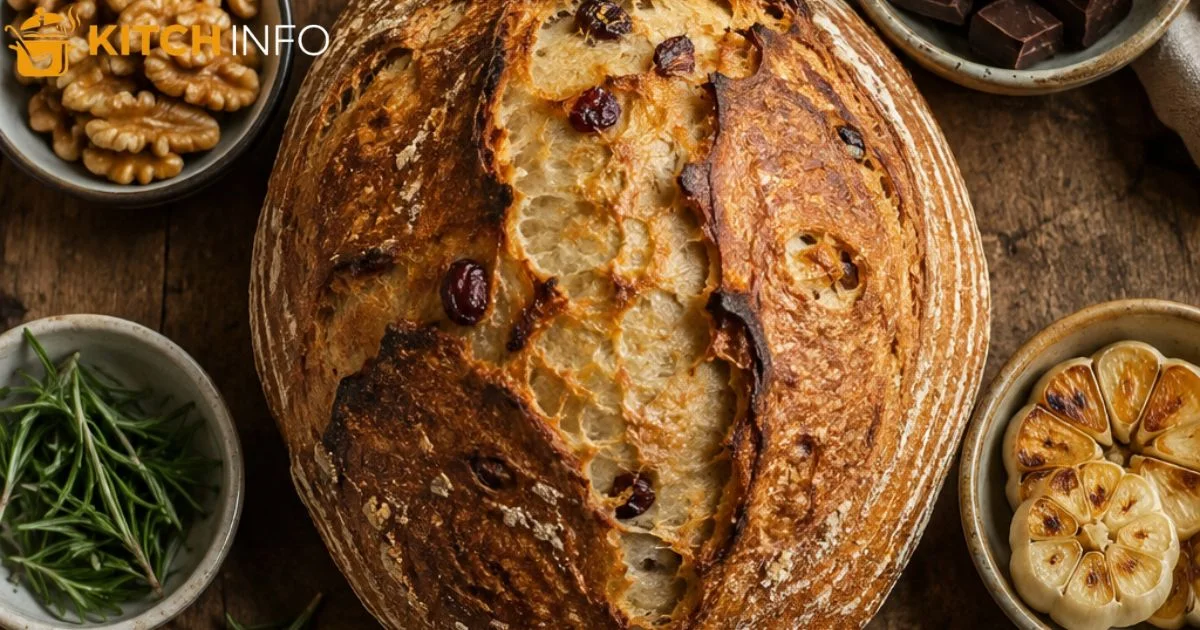
If you want to make homemade bread more exciting, simple sourdough inclusion ideas are an easy place to start. Adding the right ingredients can turn an everyday loaf into something full of flavor, texture, and character. From cheese and herbs to dried fruit, chocolate, and nuts, sourdough inclusions give you endless ways to customize your bread. The key is knowing when to add inclusions and how much to use without weakening the dough. In this guide, you will discover practical how to add inclusions tips, easy flavor combinations, and beginner friendly methods. These ideas can help you create delicious sourdough bread with better flavor and a beautiful crumb.
What Are Simple Sourdough Inclusion ideas?
Sourdough inclusions are ingredients mixed into fermented bread dough to add extra flavor, texture, color, or aroma. They are different from the basic ingredients that form the dough because they are optional additions rather than part of the core formula.
Common choices include cheese, herbs, dried fruit, chocolate chips, nuts, roasted garlic, and spices. These ingredients can be sweet, savory, crunchy, soft, or even slightly spicy.
The best sourdough inclusion ideas that actually work are usually simple. A few ingredients that complement each other are often better than several ingredients fighting for attention.
For example, cinnamon and raisins create a familiar sweet combination. Sharp cheddar and jalapeño create a stronger savory flavor. Roasted garlic with herbs gives a loaf a deep aroma without requiring many ingredients.
Why Add Inclusions?
A basic sourdough loaf can be delicious on its own, but inclusions give you room to experiment. They let you change the personality of the bread while keeping the same basic dough.
They can also make homemade bread more useful for different meals. A savory loaf can work well with soup or eggs, while a sweet loaf can be served with butter or cream cheese.
There is one important rule. The inclusion should support the bread rather than overwhelm it.
A small amount of an intense ingredient can be enough. This is especially true with strong cheese, salty olives, dark chocolate, or spicy peppers.
What Makes a Good Inclusion?
A good inclusion should work with the moisture level and strength of your dough. It should also be prepared properly before it goes into the bowl.
Dry ingredients are usually easier for beginners because they introduce less extra moisture. Dried fruit, chocolate, nuts, and many seasonings can be added with fewer changes to the dough.
Fresh ingredients need more attention. Fresh pineapple, fresh peppers, and other ingredients with high water content can change the dough considerably.
The goal is not simply to add something tasty. You want to preserve the structure of the bread while creating noticeable flavor.
When Should You Add Inclusions to Sourdough Dough?
Timing matters because inclusions can interfere with gluten development if they are added too early. In most cases, you should first allow the dough to develop some strength.
Many bakers add inclusions during the stretch and fold process. This gives the dough enough structure to hold the ingredients while still allowing them to become part of the loaf.
If you are following a normal stretch and fold schedule, the first set of stretch and folds can focus mainly on building dough strength. Later folds are often a better opportunity for adding ingredients.
Adding Inclusions During Stretch and Folds
Once the dough has become more elastic, gently stretch it into a rough rectangle. Spread the prepared ingredients over the surface without creating a thick pile in one area.
Fold the dough over itself and continue with gentle movements. The goal is to distribute the ingredients without tearing the gluten network.
Do not squeeze or aggressively knead the dough. A light hand helps preserve the structure you have already developed.
If the dough is very loose, wait until it gains more strength before adding anything heavy. Working inclusions into a weak dough can make shaping much harder later.
Shaping Stage Lamination
Another option is shaping stage lamination. This method involves gently spreading the dough into a thin sheet before placing the inclusions across the surface.
The ingredients can then be folded into the dough in layers. This approach can create good inclusion distribution without repeatedly handling the dough.
It is especially useful when you want the ingredients to appear throughout the loaf rather than collecting in one section.
However, lamination is not necessary for every recipe. If you are a beginner, adding small amounts during a later fold is usually easier.
When Not to Add Them
Avoid adding very wet ingredients before the dough has developed enough strength. Excess moisture can make an already loose dough even harder to handle.
You should also avoid adding fragile ingredients too aggressively. Soft fruit and delicate herbs can break apart and release moisture during handling.
A simple approach works best. Build strength first, add the ingredients gently, and then allow fermentation to continue.
How Much of Each Inclusion Should You Add?
The amount of inclusion you use can change the final loaf more than you might expect. Too little may be difficult to notice, while too much can weigh down your dough.
A useful starting point is 10 to 20 percent of your flour weight. This gives you room to adjust the amount based on the ingredient and the flavor you want.
For example, if your recipe contains 500 grams of flour, 10 percent would be 50 grams of add ins. Fifteen percent would be 75 grams, while 20 percent would be 100 grams.
These numbers are starting points rather than strict rules. A strong, dry ingredient may be easier to use in a larger quantity than a wet or heavy ingredient.
Light Inclusions
For a light hand and subtle flavor, begin around 10% of flour weight. This level can work well when you want minimal impact on rise.
It is useful for mild herbs, small amounts of seeds, or a gentle amount of cheese.
The result should still feel close to a standard loaf, with an extra layer of flavor appearing as you chew.
Moderate Inclusions
Around 15% of flour weight can provide a well balanced flavor while keeping the dough relatively easy to manage.
This amount works well when the inclusion should be noticeable in every slice but should not dominate the bread.
It can be a good middle ground for dried fruit, chocolate, nuts, or cheese.
Generous Inclusions
Around 20% of flour weight gives a more generous result with bold flavor. This amount can work beautifully, but the ingredient needs to be chosen and prepared carefully.
Heavy ingredients can affect oven spring and may weigh down your dough. Wet ingredients can also change hydration and make shaping difficult.
For a beginner sourdough baker, starting closer to 10 or 15 percent is usually the safer choice.
How to Prepare Sourdough Inclusions Before Adding Them

Preparation is one of the easiest ways to improve an inclusion loaf. The right ingredient can still cause problems if it carries too much moisture or is added in large pieces.
Before adding anything, consider its size, moisture level, weight, and flavor strength.
Dry ingredients are generally simple. Nuts can be chopped into even pieces, chocolate can be broken into small chunks, and dried fruit can be cut into manageable pieces.
Fresh ingredients require more care because they may release water into the dough.
Managing Watery Fresh Ingredients
Watery fresh ingredients can create a loose dough and interfere with gluten structure. They may also make the crumb uneven if moisture collects around the pieces.
Fresh jalapeños and fresh peppers are good examples. Instead of adding them directly, dry sauté them briefly to drive off excess water.
Let them cool completely before mixing them into the dough. Hot ingredients can affect fermentation and make handling unpleasant.
This small preparation step can make a major difference.
Fresh Fruit Needs Extra Care
Fresh fruit can contain a surprising amount of water. Some fruits also contain enzymes that behave differently during fermentation.
Fresh pineapple deserves particular attention because bromelain can affect proteins and potentially interfere with gluten development. Dried pineapple is usually easier to manage in sourdough.
If you want fruit flavor without introducing excess water, dried fruit is often the more beginner friendly choice.
Preparing Nuts and Chocolate
Nuts should be chopped into pieces that are small enough to distribute easily. Very large pieces can create weak spots while shaping.
Toasting nuts can deepen their flavor, but always allow them to cool before adding them to the dough.
Chocolate should also be kept cool. If it becomes too warm, it can soften and smear through the dough instead of staying in distinct pieces.
Dark chocolate can create a rich contrast with lightly sweet dough, while smaller chocolate pieces can spread flavor throughout the crumb.
How Inclusions Affect Dough Texture and Fermentation
Inclusions do more than change flavor. They can change the physical behavior of your dough.
Heavy ingredients can make dough feel less elastic. Wet ingredients can increase hydration. Sharp pieces can sometimes interfere with the gluten network when the dough is handled.
A recipe that feels easy as a plain dough may feel very different after ingredients are added.
Moisture Changes
Moisture is one of the biggest factors to watch. Ingredients that release moisture can make the dough slack, sticky, and difficult to shape.
As the extra water spreads through the dough, hydration balance can change. This is why preparing fresh ingredients before mixing them in matters so much.
A little extra moisture may not cause a problem. A large amount can create a dough that never develops the strength you expected.
Weight and Gluten Structure
Heavy inclusions can put extra pressure on the dough. If you add too much cheese, nuts, or dense dried fruit, the loaf may rise more slowly.
This does not mean you should avoid generous fillings. It simply means you need to match the amount to the strength of your dough.
An elastic dough can usually handle inclusions better than a weak dough. A slack dough may spread during shaping instead of standing tall.
Fermentation Changes
Inclusions can also slow your fermentation. Some ingredients contain compounds that may affect wild yeast or bacteria, while others simply make the dough heavier.
Cinnamon is an ingredient worth using carefully. In larger amounts, it may suppress the wild yeast and contribute to a sluggish rise.
This does not mean cinnamon cannot be used. It means that balance matters.
If your inclusion loaf rises more slowly than your basic sourdough loaves, do not immediately assume something went wrong. The added ingredients may simply be changing the rate of fermentation.
Common Problems When Adding Inclusions
Adding ingredients can be easy once you understand the main pitfalls. Most problems come from too much moisture, too many heavy ingredients, poor distribution, or adding ingredients at the wrong stage.
A little attention before mixing can prevent many frustrating results.
Dough Becomes Too Slack
If your dough suddenly feels much looser after adding an ingredient, moisture is often the reason.
Fresh fruit, fresh peppers, and other wet ingredients can release moisture as fermentation continues. This can mess with your hydration and make the dough difficult to shape.
The best solution is usually better ingredient preparation rather than adding large amounts of extra flour.
Dense or Gummy Loaf
A dense, gummy loaf can happen when too many heavy ingredients are packed into the dough or when fermentation becomes sluggish.
High moisture content can also create a gummy layer around wet ingredients. If the dough cannot develop and bake properly, the crumb may remain heavier than expected.
Keep your inclusion percentage moderate and give the dough enough time to ferment.
Uneven Distribution
Poor inclusion distribution can leave some slices nearly plain while others contain large clusters.
To prevent this, spread ingredients across the dough rather than placing them in one pile.
Gentle folding helps create even distribution without damaging the dough.
Inclusions Burn on Top
Some ingredients can scorch during baking. Exposed cheese, sugar, chocolate, or small dried pieces may darken quickly when sitting on the surface.
If you notice inclusions burning on top, try keeping more of them inside the dough during shaping.
For loaves that darken heavily underneath, rice flour can help reduce sticking without adding much moisture. A heat shield can also be useful when the bottom crust becomes too dark in your baking setup.
Staining Your Proofing Basket
Some ingredients can release strong colors into a banneton or proofing basket.
Sun dried tomato, certain spices, and brightly colored ingredients may stain fabric or leave residue.
A plastic banneton liner or a well floured towel can provide an extra barrier. This is especially useful when working with colorful or oily ingredients.
How to Add Sweet Inclusions to Sourdough
Sweet inclusions can turn a basic loaf into something that feels closer to a bakery treat. The trick is to keep the sweetness balanced so the bread still tastes like sourdough.
Chocolate chip and dried blueberry make an easy starting combination. Both ingredients are simple to handle, and neither adds as much water as fresh fruit.
Marzipan stuffed dough creates a richer experience, while red hot cinnamon candy gives a strong cinnamon flavor and a striking appearance.
Fruit Based Sweet Additions
Dried cranberry and orange zest create a bright combination with sweet and slightly tart notes.
A cinnamon raisin loaf is another familiar choice. The raisins add chewiness while cinnamon gives the bread a warm aroma.
Dried apricot and cardamom offer a more fragrant option. Cardamom has a strong flavor, so a small amount can be enough.
When using dried fruit, check that the pieces are not overly dry or stuck together. Smaller pieces usually distribute more evenly.
Chocolate Based Sweet Additions
Chocolate works especially well with sourdough because its richness contrasts with the slightly tangy flavor of fermented dough.
A brown sugar and walnut swirl adds sweetness, crunch, and a deeper toasted flavor. Dark chocolate and sea salt provide another simple combination with a stronger contrast.
Keep chocolate pieces reasonably small so they do not create large empty pockets around themselves.
If you prefer a softer result, a pesto swirl belongs in savory baking rather than sweet bread, while cream cheese can be used as a serving partner for sweet loaves.
Savory Sourdough Inclusion Ideas
Savory combinations are some of the easiest ways to make an everyday loaf more interesting. Strong ingredients often need only a few supporting flavors.
A classic example is jalapeño and sharp cheddar. The pepper brings heat while the cheese adds richness and saltiness.
Roasted garlic and herb is another dependable option. Roasted garlic has a softer flavor than raw garlic, which makes it easier to blend into bread.
For something with more heat and freshness, chili crisp and green scallion can create a bold combination.
Caraway and thyme provide an earthy and herbal profile. Sun dried tomato and parmesan bring savory depth with a slightly salty finish.
Kalamata olives and rosemary are a natural match for sourdough. The olives add a rich salty flavor while rosemary contributes a strong herbal aroma.
Bacon and gruyère create a rich, hearty loaf that works especially well alongside breakfast foods or soups.
Caramelized onion and thyme offer a softer savory profile. The onions bring sweetness while thyme adds an earthy herbal note.
Other ingredients can also work well when used carefully. A small amount of cheese can add richness without making the loaf heavy. Herbs can bring aroma without changing the dough very much.
The most reliable approach is to begin with one main flavor and one supporting ingredient. Once you understand how that combination behaves during fermentation and baking, you can gradually experiment with larger amounts.
The goal is a loaf where the inclusions feel intentional rather than random. With the right quantity, preparation, and timing, even a basic sourdough formula can become a completely different bread.
Sweet Sourdough Inclusion Ideas
Sweet additions can make homemade bread feel special without turning it into a complicated baking project. The easiest approach is to choose one main flavor and pair it with a simple ingredient that supports it.
Maple inspired flavors, warm spices, dried berries, and small pieces of confectionery can all work well. Keep the total amount moderate so the dough can still rise properly.
A useful trick is to think about contrast. Something sweet can benefit from a little salt, while a rich ingredient can taste better with a bright fruit flavor.
Fruit Based Sourdough Inclusion Ideas
Dried fruit is one of the most beginner friendly choices because it adds flavor without introducing as much liquid as fresh produce.
Chopped cherries, raisins, cranberries, blueberries, and apricots can each create a different result. Cut larger pieces into smaller chunks so they spread throughout the dough instead of forming heavy pockets.
For a brighter loaf, combine dried berries with a small amount of citrus peel. For a warmer flavor, pair dried fruit with gentle spices such as nutmeg or ginger.
Always check very sticky fruit before using it. Separate pieces with your fingers so they do not enter the dough as one large clump.
Cheese and Herb Sourdough Inclusion Ideas
Cheese gives bread a rich flavor and can create small melted pockets throughout the crumb. Mild cheeses produce a softer result, while stronger varieties create a more noticeable savory taste.
Fresh herbs can add aroma without dramatically changing the dough. Rosemary, parsley, sage, and chives are useful choices for home bakers.
Try pairing a mild cheese with rosemary for a simple everyday loaf. Another option is a sharper cheese with chives when you want a stronger flavor.
Keep cheese pieces fairly small and spread them across the dough. Large chunks can create weak areas and may melt into empty spaces during baking.
Nut and Seed Sourdough Inclusion Ideas
Nuts add crunch and a toasted flavor that works especially well in hearty bread. Pecans, almonds, pistachios, and hazelnuts are easy choices.
Seeds can provide a lighter crunch. Pumpkin seeds, sunflower seeds, sesame seeds, and flax seeds can be used alone or combined in small amounts.
Toasting nuts before adding them can make their flavor much deeper. Let them cool completely before mixing them into the dough.
Avoid using very large pieces. Smaller pieces are easier to distribute and are less likely to interfere with shaping.
Chocolate and Dessert Inspired Sourdough Inclusion Ideas
Chocolate can give fermented bread a rich dessert like character while still allowing the natural tang of the dough to come through.
Semi sweet chocolate is a dependable choice for beginners. Dark chocolate works well when you prefer a deeper flavor, while white chocolate creates a sweeter result.
For a simple dessert inspired loaf, combine chocolate with a warm spice or dried fruit. A small amount of chopped nuts can also add useful texture.
Keep chocolate cool before adding it. Warm chocolate can soften during handling and spread through the dough instead of remaining in distinct pieces.
Best Sourdough Inclusion Combinations

The best combinations usually have a clear flavor balance. You do not need five ingredients to create an interesting loaf.
| Combination | Flavor Profile |
|---|---|
| Dried cherry and almond | Fruity and nutty |
| Apple and walnut | Sweet and hearty |
| Rosemary and cheese | Savory and aromatic |
| Cranberry and citrus peel | Bright and slightly tart |
| Dark chocolate and cherry | Rich and fruity |
| Pistachio and dried apricot | Sweet and lightly nutty |
Think of these combinations as starting points rather than fixed recipes. You can adjust the amount according to the strength of each ingredient.
If one ingredient has a powerful flavor, let it remain the star. Supporting ingredients should add contrast rather than compete for attention.
Tips for Successfully Adding Inclusions to Sourdough
Start with a small amount when trying a new combination. This lets you learn how the ingredient behaves before committing to a heavily loaded loaf.
Prepare every ingredient before touching the dough. Chop large pieces, separate sticky fruit, cool toasted nuts, and remove unnecessary moisture from fresh ingredients.
Spread the additions over the dough instead of dropping everything into the center. This makes the final loaf more consistent from edge to edge.
Handle the dough gently after adding the ingredients. Too much pressure can tear its structure and push delicate pieces through the surface.
Watch the dough rather than following the clock blindly. Different additions can change how quickly the loaf develops and rises.
During shaping, keep most ingredients inside the dough. Exposed pieces can darken quickly in the oven and may create bitter spots.
Finally, let the finished loaf cool before slicing. Cutting too early can compress the interior and make it seem wetter than it really is.
Conclusion
Simple sourdough inclusion ideas give home bakers an easy way to create more interesting bread without changing everything about their usual process.
The secret is balance. Choose ingredients that work together, control their moisture, use sensible quantities, and handle the dough gently.
Start with one familiar pairing, learn how it behaves, and then experiment with new flavors. Once you understand how different additions affect your dough, creating unique loaves becomes much easier and far more enjoyable.

Muhammad Ali writes about baking and recipes at kitchinfo. He researches techniques from trusted bakers, cookbooks, and culinary experts, and turns them into clear, step-by-step guides . so bakers of every skill level can get great results without the confusion.
2 thoughts on “Simple Sourdough Inclusion Ideas: Easy & Tasty Tips”
Comments are closed.