

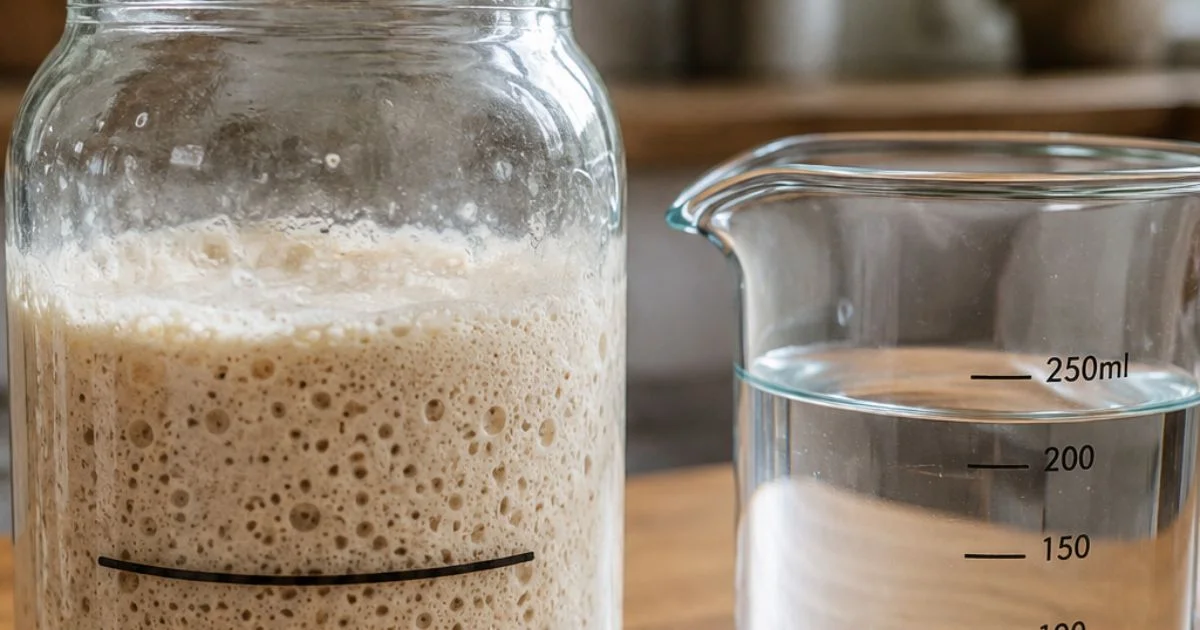
Choosing the best water for sourdough starter is one of the easiest ways to build a strong, healthy, and active sourdough starter. Water affects fermentation, supports wild yeast, and influences the overall water quality inside your starter. The best water is clean, free from excessive chlorine, and contains a balanced mineral content to help beneficial microbes grow. While many bakers successfully use filtered tap water or spring water, the right choice depends on your local water supply. Using the best water for sourdough starter consistently helps improve starter activity, creates more reliable baking results, and gives you a stronger foundation for making delicious homemade sourdough bread.
What Is the Best Water for Sourdough Starter?
The best choice for most home bakers is clean water that contains natural minerals but does not contain high levels of chemicals that interfere with microbial activity. A healthy starter culture depends on a balanced environment where yeast and bacteria can thrive together.
Water serves several purposes inside a starter. It hydrates the flour, dissolves nutrients, and creates an environment where microorganisms can multiply. Without suitable water, even the highest quality flour may not produce a strong starter.
A good water source should support steady growth without introducing unnecessary problems. It should not contain excessive disinfectants, unpleasant flavors, or contaminants that could slow activity.
For most people in the United States, there is no single perfect water that works for every kitchen. Local water supplies vary from one city to another. Some municipal systems treat water differently than others, and private homes may have their own filtration systems.
Instead of looking for a magic solution, focus on choosing water that provides a healthy balance of minerals while avoiding substances that may interfere with natural fermentation.
The Ideal Balance
A sourdough starter performs best when water provides enough natural minerals to support yeast activity without becoming overly concentrated.
Water with a balanced mineral profile helps create stable conditions during daily feedings. This encourages predictable growth and makes it easier to maintain a regular routine.
Very soft water may lack enough minerals, while extremely mineral heavy water can also create challenges. A moderate balance is usually the safest option.
Consistency Matters More Than Perfection
One of the biggest secrets to maintaining a healthy starter is consistency.
Using the same water source for every feeding allows your starter to adapt over time. Frequent changes between different water types can produce small differences in activity that make troubleshooting more difficult.
Many experienced bakers continue using the same water successfully for years simply because their starter has become well adapted to those conditions.
Why Water Quality Matters

Water is far more than just a liquid ingredient. It directly affects how yeast and bacteria behave inside the mixture.
The microorganisms inside a sourdough starter depend on the surrounding environment. When water quality changes significantly, their growth rate can also change.
Several factors determine whether water supports healthy microbial activity.
Chlorine Can Slow Growth
Most public water systems add chlorine to kill harmful organisms before the water reaches your home.
This process helps keep drinking water safe, but chlorine can also reduce the activity of the beneficial microorganisms living inside a sourdough starter.
Fortunately, chlorine is relatively easy to remove because it naturally evaporates from standing water over time.
If your tap water has a strong swimming pool smell, allowing it to sit uncovered for several hours before using it may improve your starter’s performance.
Chloramine Behaves Differently
Some cities use chloramine instead of chlorine.
Unlike chlorine, chloramine does not evaporate easily. This makes it more stable for municipal water systems but also more difficult to remove without proper filtration.
If your local water utility uses chloramine, simply letting water sit overnight may not solve the problem.
Checking your local water report can help you understand which disinfectant your city uses.
Mineral Content Supports Healthy Activity
Natural minerals provide nutrients that encourage yeast and bacteria to grow.
The right mineral content helps maintain steady fermentation and supports a healthy balance between different microorganisms.
Calcium, magnesium, and other naturally occurring minerals can contribute to stronger starter performance.
Water that contains moderate mineral levels often produces more reliable results than water that has been stripped of nearly everything.
Water Can Influence Acidity
As fermentation progresses, the bacteria inside the starter naturally produce acids.
These acids gradually lower pH, creating conditions that encourage beneficial organisms while discouraging harmful ones.
Although water does not completely determine acidity, its natural composition can influence how easily the starter reaches a healthy balance.
Most starters naturally settle into an environment that remains close to the ideal range for fermentation.
Healthy Microbes Need the Right Environment
The living microbes inside your starter constantly compete for nutrients.
When conditions remain stable, beneficial yeast and bacteria become stronger over time.
Poor quality water may introduce unnecessary stress that slows this natural process.
Creating a stable environment helps the culture mature into a reliable baking companion.
Characteristics of Good Water
Good water does not have to be expensive. It simply needs to provide clean, stable conditions for healthy fermentation.
Several characteristics make water suitable for maintaining a healthy starter.
Clean Taste and Smell
Water should taste fresh and have little or no noticeable odor.
Strong chemical smells often indicate higher levels of disinfectants that may interfere with microbial activity.
If your drinking water tastes pleasant, it is usually a good starting point.
Moderate Mineral Levels
Water that contains natural minerals generally supports healthy yeast growth better than water that contains almost none.
Many experienced bakers prefer mineral rich water because it supplies naturally occurring nutrients without requiring any special additives.
Moderation remains the key.
Comfortable Water Temperature
Extremely hot water can damage yeast, while very cold water slows fermentation.
Using room temperature water provides a comfortable environment where microorganisms can begin working immediately after feeding.
Most home kitchens naturally provide water that falls within an appropriate range.
Stable Water Quality
A reliable water source helps create consistent baking results.
Frequent changes between different bottled brands or household filters may produce slight variations in fermentation speed.
Keeping your routine consistent makes it easier to recognize how your starter normally behaves.
Is Tap Water a Good Choice?

For many people across the United States, tap water works perfectly well.
Thousands of successful sourdough bakers use municipal water every day without experiencing any problems.
Whether tap water works well depends largely on your local water treatment practices.
When Tap Water Works Well
If your local supply contains moderate mineral levels and only small amounts of disinfectants, tap water often supports healthy starter growth.
Many starters become fully active while using ordinary household water.
If your starter consistently rises well and develops a pleasant aroma, your tap water is probably doing its job.
When Tap Water May Cause Problems
Some municipal systems contain higher disinfectant levels or unique mineral profiles.
If your starter remains unusually slow despite regular feeding, your water source may deserve a closer look.
This does not automatically mean tap water is bad. It simply means another option may work better for your specific location.
Understanding Local Water Reports
Every public water supplier in the United States provides annual water quality reports.
These reports explain treatment methods and basic mineral information.
Reviewing your local report can provide useful clues if your starter struggles despite good baking practices.
In my own experience, safe drinking tap water has worked consistently well. I didn’t need to switch to bottled or spring water the starter stayed active and rose predictably on a normal feeding schedule. If your tap water is already considered safe and drinkable in your area, that’s usually your simplest and most cost-effective starting point before experimenting with anything else.
Is Filtered Water Better Than Tap Water?
In many situations, filtered tap water offers an excellent balance between convenience and performance.
Filtering can reduce certain chemicals while preserving many naturally occurring minerals.
This makes filtration a popular choice among experienced home bakers.
Benefits of Filtered Water
Many household filters improve taste by reducing chlorine and other substances that affect flavor.
As a result, filtered water often creates a more welcoming environment for yeast and bacteria.
For many kitchens, this simple improvement is enough to produce healthier starter activity.
Not All Filters Work the Same Way
Different filtration systems remove different substances.
Some basic pitcher filters mainly reduce chlorine, while advanced systems remove a much wider range of compounds.
Understanding your specific filter helps you know what changes to expect.
Should You Avoid Unfiltered Water?
Some people successfully use unfiltered tap water for years without any issues.
Others notice significant improvement after switching to filtered water.
The answer depends entirely on your local water supply.
If your starter performs well, there is usually no reason to make major changes.
Should You Use Distilled Water?
Many beginners assume pure water must be the best choice.
However, distilled water is usually not the first recommendation for maintaining a healthy sourdough starter.
Distillation removes nearly all dissolved minerals.
Although this creates very clean water, it also removes many naturally occurring nutrients that yeast and bacteria can benefit from.
Why Minerals Matter
Microorganisms rely on their environment for nutrients.
Without natural minerals, fermentation may proceed more slowly or less consistently.
A small amount of naturally occurring minerals often produces stronger long term performance.
Can Distilled Water Still Work?
Yes, a starter can survive with distilled water.
However, many bakers find that mineral containing water produces better activity over time.
If distilled water is your only available option, your starter may still become healthy with proper care and a consistent feeding schedule.
Is Reverse Osmosis Water Suitable?
Many American households use reverse osmosis water for drinking because it removes many impurities.
This process also removes a large percentage of natural minerals.
As a result, reverse osmosis water shares some similarities with distilled water.
Advantages
Reverse osmosis systems produce clean tasting water with very low levels of contaminants.
For homes with poor quality municipal supplies, this can be a valuable improvement.
Potential Drawbacks
Because many minerals are removed during filtration, some starters may become less active compared with starters fed using moderately mineralized water.
Some bakers notice slower starter rise, while others see very little difference.
Results often depend on the flour being used, local environmental conditions, and the maturity of the culture.
Testing Your Results
If you already have a reverse osmosis system, there is no need to assume it will fail.
Observe your starter over several feeding cycles.
Look for signs such as steady starter expansion, predictable timing, pleasant aroma, and reliable growth.
If your starter develops normally, your water is likely working well for your kitchen.
If it consistently becomes a sluggish starter despite good flour and regular care, experimenting with another mineral containing water source may help identify whether water is contributing to the problem.
Is Spring Water a Good Option?
For many home bakers, spring water is one of the most dependable choices. It naturally contains minerals that help support healthy fermentation while avoiding many of the chemicals found in treated municipal water.
The quality of spring water can vary by brand because it comes from different natural sources. Reading the label can help you understand where the water comes from and whether it contains added ingredients.
If you buy bottled spring water, choose a plain product without flavors, sweeteners, or carbonation. A simple spring water is usually the best option for maintaining a healthy starter.
Can You Use Well Water?
Many people living in rural areas use well water, and it can work very well for sourdough.
Because private wells are not treated the same way as city water, they often do not contain chlorine based disinfectants. This can be an advantage for fermentation.
However, every well is different. Some wells naturally contain high levels of minerals, while others may have impurities that affect baking. Regular water testing is important to ensure the water is safe for drinking and baking.
If your well water tastes clean and has been tested, it is often a perfectly suitable choice for feeding your starter.
Hard Water vs. Soft Water

Water hardness refers to the amount of dissolved minerals, mainly calcium and magnesium.
Hard water contains higher amounts of these minerals. In many cases, moderate hardness supports healthy fermentation because the minerals are useful to the microorganisms living in the starter.
Very hard water, however, may affect consistency if the mineral levels become excessive.
Softened water is different. Water softeners often replace natural minerals with sodium during the treatment process. Because of this change, softened water is generally not the first choice for maintaining a sourdough starter.
When possible, use water before it passes through a household softener or choose another suitable source.
How to Remove Chlorine from Water
If your local water contains chlorine, removing it is often simple.
One easy method is to pour water into a clean container and leave it uncovered for several hours or overnight. In many cases, the chlorine will naturally dissipate.
Another option is using a household water filter that is designed to reduce chlorine. Many countertop pitchers and faucet filters are effective for this purpose.
If your city uses chloramine instead of chlorine, a filter certified to reduce chloramine is usually a better solution because letting the water sit is often not enough.
Checking your local water utility report can help you choose the most effective method.
What Is the Ideal Water Temperature?

Temperature plays an important role every time you feed your starter.
The best choice is water that feels neither hot nor cold. Moderate water temperature encourages steady microbial activity without causing unnecessary stress.
Water that is too hot can damage the living organisms inside the starter.
Very cold water slows fermentation and may delay visible growth.
Most home bakers achieve reliable results by using water that has reached ambient temperature before mixing it with flour.
Keeping both your ingredients and your kitchen environment reasonably consistent helps produce more predictable results from one feeding to the next.
Water Types to Avoid
Not every type of water is a good fit for sourdough. Some options create unnecessary challenges or provide little benefit.
| Water Type | Recommendation | Reason |
|---|---|---|
| Mineral water with extremely high mineral levels | Use with caution | Excessive minerals may affect consistency. |
| Sparkling mineral water | Avoid | Carbonation changes the mixing environment. |
| Carbonated mineral water | Avoid | Added carbon dioxide offers no benefit to the starter. |
| Highly flavored bottled water | Avoid | Extra ingredients are unnecessary. |
| Water with a strong chemical smell | Avoid if possible | It may contain high disinfectant levels. |
Some people also ask about using bottled water. Plain bottled water can work well, but check the label to understand its source and mineral content before making it your regular choice.
Common Mistakes When Choosing Water

Choosing the right water is usually simple, but a few common mistakes can slow your progress.
One mistake is changing water sources too often. Consistency helps your starter adapt and makes it easier to identify what works.
Another mistake is assuming the most purified water is automatically the best. Water that contains some natural minerals is often a better long term choice than water that has had nearly everything removed.
Some beginners also try unusual ingredients such as pineapple juice or lemon juice when starting a culture. While these methods are sometimes discussed, they are generally unnecessary for most home bakers using fresh flour and good quality water.
Another common issue is focusing only on water while ignoring the rest of the routine. A balanced feeding ratio, consistent feeding times, and quality flour all work together to support a healthy starter.
Many experienced bakers also recommend keeping your process clean. Simple habits that reduce cross contamination help maintain a stable culture over time.
Using a Digital Precision Scale instead of measuring by volume can improve consistency because each feeding is more accurate.
As your starter matures, pay attention to starter peak rather than following the clock alone. A responsive feeding approach based on the starter’s activity often produces better results than a rigid schedule.
A mature active starter will naturally rise and eventually show starter deflation after reaching its highest point. Learning this pattern helps you understand when your starter is ready for baking or another feeding.
If you already have an established starter, avoid making multiple changes at the same time. Adjust one variable, observe the results for several feedings, and then decide whether another change is needed. This simple approach creates a small controlled experiment that makes troubleshooting much easier.
Good hydration also matters. Measuring flour and water carefully keeps the starter at the consistency you expect and supports reliable fermentation.
If you have extra starter after feedings, consider saving it for recipes like discard crackers instead of throwing it away.
Final Thoughts
Choosing the best water for your sourdough starter does not have to be complicated. In most American kitchens, clean water with moderate natural minerals and low levels of disinfectants provides excellent results.
Spring water, properly filtered tap water, and many well water supplies are all good options when they are clean and consistent. The best choice for your kitchen is the one that allows your starter to grow steadily, develop a pleasant aroma, and perform reliably over time.
Rather than chasing the perfect water, focus on building a consistent routine. Use the same water source whenever possible, measure your ingredients carefully, and observe how your starter responds after each feeding.
With patience and a little attention to water quality, your sourdough starter can become stronger, more predictable, and ready to help you bake flavorful homemade bread for years to come.
FAQS
What kind of water do you use for sourdough starter?
Use clean, mineral rich filtered water or spring water at room temperature.
What is the best bottled water for sourdough starter?
Plain bottled spring water with natural minerals is usually the best choice.
Is distilled or purified water better for sourdough?
Purified water with some natural minerals is generally better than distilled water.
Will tap water ruin my sourdough starter?
No, most tap water works fine unless it contains high levels of chlorine or chloramine.
What is the biggest mistake you can make with your sourdough starter?
The biggest mistake is being inconsistent with feeding and using unsuitable water or poor quality ingredients.

Muhammad Ali writes about baking and recipes at kitchinfo. He researches techniques from trusted bakers, cookbooks, and culinary experts, and turns them into clear, step-by-step guides . so bakers of every skill level can get great results without the confusion.