

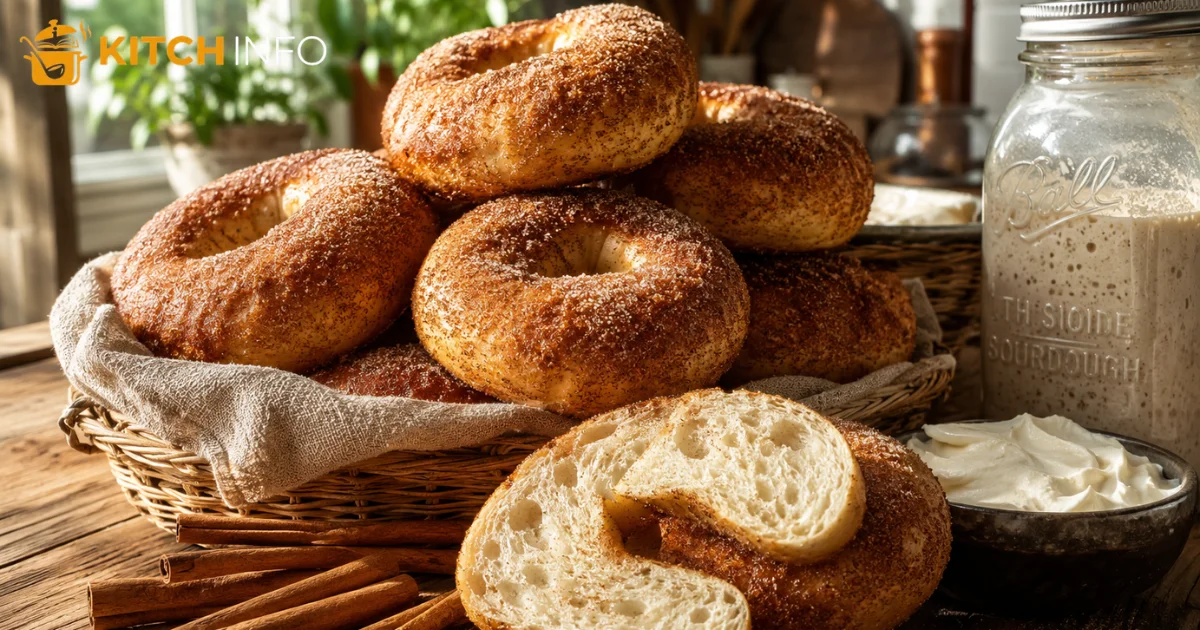
Cinnamon Sugar Sourdough Bagels are the perfect combination of comforting sweetness and classic bakery texture, making them a delicious choice for breakfast, brunch, or a cozy weekend treat. Made with an active sourdough starter, these flavorful sweet sourdough bagels develop a rich taste through natural fermentation, creating a soft interior and a satisfyingly chewy crust. A blend of fragrant cinnamon sugar adds warmth and sweetness to every bite, while quality ingredients help deliver bakery style results at home. Whether you are an experienced baker or trying a sourdough bagels recipe for the first time, these homemade bagels offer a rewarding baking experience and unforgettable flavor that everyone will enjoy.
What Makes These Bagels So Special?

There is something truly unique about making sourdough bagels from scratch. Instead of relying on commercial yeast, the dough rises with the help of a naturally cultivated culture. This slower process develops a more complex flavor while also creating the chewy texture that great bagels are known for.
Unlike many bakery versions that rely heavily on sweetness, these bagels maintain a balanced flavor. The warm spice enhances the bread instead of overpowering it. Every bite offers a pleasant contrast between the crisp exterior and the soft interior.
Natural fermentation also changes the character of the dough. During the resting period, the flavors deepen while the dough becomes easier to shape and bake. This extra time rewards you with a finished product that tastes richer and more satisfying.
Another reason these bagels stand out is their versatility. They are wonderful fresh from the oven, lightly toasted the next morning, or served as part of a festive holiday meal. Their flavor appeals to both children and adults, making them a dependable choice for many occasions.
Naturally Developed Flavor
Traditional baking methods often focus on speed. In contrast, sourdough baking values patience. The natural culture slowly develops flavor over time, creating notes that simply cannot be achieved with quick rising dough.
As the dough ferments, it develops a gentle tang that pairs beautifully with sweet spices. The finished bagel has depth, warmth, and complexity without becoming overly sour.
A Perfect Balance of Sweetness
Many sweet breads become heavy because they contain large amounts of sugar. These bagels avoid that problem by using just enough sweetness to highlight the spice blend.
The combination of cinnamon sugar creates a comforting aroma that fills the kitchen during baking. Instead of tasting like dessert, the finished bagels remain balanced enough to enjoy any time of day.
The Texture Everyone Loves
One of the biggest reasons people love bagels is their texture. The outside should be slightly firm while the inside remains soft and pleasantly chewy.
Several important baking techniques work together to achieve this result. Careful shaping, proper fermentation, and boiling before baking all contribute to creating the classic bagel experience.
The finished bagels develop a lightly crusty outer layer while remaining tender inside. After baking, they become beautifully golden brown, making them look just as impressive as they taste.
Perfect for Many Occasions
These bagels fit naturally into many moments throughout the year.
They make an excellent breakfast before a busy workday. They are equally welcome at a relaxed brunch with family and friends.
During holidays, birthdays, or weekend gatherings, they become a memorable addition to the table. Their comforting flavor also makes them an ideal special occasion breakfast when you want something homemade without being overly complicated.
Because they freeze well, you can prepare a large batch ahead of time and enjoy fresh tasting bagels whenever the craving strikes.
Ingredients You’ll Need

The quality of your ingredients has a direct impact on your finished bagels. Using fresh, dependable ingredients helps produce consistent results while allowing the natural flavors to shine.
One of the greatest strengths of this recipe is its simplicity. Every ingredient serves a clear purpose, from building gluten to adding sweetness or enhancing aroma.
Sourdough Starter
A healthy sourdough starter is the heart of this recipe. It provides the natural fermentation that gives these bagels their signature flavor and texture.
For best results, begin with an active sourdough starter that has been recently fed. It should appear light, airy, and full of life before mixing the dough.
A healthy bubbly starter is a sign that the natural culture contains strong wild yeast capable of producing a successful rise.
Flour
The choice of flour greatly influences the finished texture.
Many bakers prefer bread flour because its higher protein content creates stronger gluten, resulting in chewier bagels.
If you prefer a slightly softer texture, all purpose flour also performs well.
Some bakers choose unbleached flour because it maintains a more natural character while supporting consistent fermentation.
Water
Always use filtered water whenever possible. Chlorine found in some tap water can affect fermentation, especially if your local water contains higher treatment levels.
Water should feel comfortably warm but never hot. Excessive heat may weaken the natural culture before fermentation begins.
Sweeteners
A small amount of honey helps support fermentation while adding subtle flavor.
The topping combines brown sugar and cane sugar, creating a pleasant sweetness with just a hint of caramel richness.
Seasonings
Fresh cinnamon is the defining spice in this recipe. Choose a high quality variety with a strong aroma for the best flavor.
Some bakers like adding a soft cinnamon filling inside each bagel for extra sweetness. Others prefer creating a beautiful cinnamon swirl by gently folding the spice mixture into the dough before shaping.
Either method produces delicious results while giving each bagel its own unique appearance.
Salt
Good quality sea salt strengthens the dough while balancing sweetness. It also improves flavor development during fermentation.
Avoid reducing the salt too much because it plays an important role in both taste and dough structure.
Butter
A light coating of melted butter brushed over freshly baked bagels helps the cinnamon topping stick while adding richness.
If you prefer greater control over flavor, choose unsalted butter so you can manage the overall salt level yourself.
Baking Ingredients
When it comes time to prepare the boiling bath, baking soda helps create the traditional bagel crust.
This simple ingredient encourages better browning during baking while supporting the classic chewy exterior.
Essential Equipment
You do not need a professional bakery to produce excellent bagels. Most home kitchens already contain everything required for success.
Having the right tools simply makes each step smoother and more enjoyable.
| Equipment | Purpose |
| Large mixing bowl | Combines all ingredients comfortably |
| Stand mixer | Makes kneading easier for larger batches |
| Dough hook | Develops gluten efficiently |
| Dough whisk | Mixes sticky dough during the early stage |
| Kitchen scale | Measures ingredients accurately |
| Bench scraper | Divides and handles dough neatly |
| Baking sheet | Supports even baking |
| Parchment paper | Prevents sticking |
| Silicone baking mat | Reusable alternative for easy cleanup |
| Slotted spoon | Removes bagels safely after boiling |
| Pastry brush | Applies butter evenly |
| Cooling rack | Prevents soggy bottoms after baking |
Accurate measuring is especially important in sourdough baking. A kitchen scale produces more consistent results than measuring cups because flour can vary greatly depending on how it is scooped.
Many home bakers enjoy using a stand mixer to save time during kneading. However, hand kneading also works very well if you prefer a more traditional approach.
How to Make Cinnamon Sugar Sourdough Bagels

Creating homemade bagels is a step by step process. None of the individual stages are difficult, but each contributes to the final texture and flavor.
Working patiently allows the dough to develop naturally while making the shaping process much easier.
Mix the Dough
Begin by combining your starter, water, sweetener, flour, and salt.
Carefully mix the dough until all dry ingredients are fully incorporated. At this stage the mixture will appear rough and slightly sticky.
Allow it to rest briefly before continuing. This short pause gives the flour time to absorb moisture evenly.
Knead the Dough
Next, knead the dough until it becomes smooth, elastic, and slightly firm.
This step develops the gluten structure that gives bagels their signature chew.
If using a mixer, knead on medium speed. When working by hand, steady folding and pressing motions produce excellent results.
Bulk Rise
Once kneaded, place the dough into a lightly covered bowl for the bulk rise.
During this period, the fermented dough slowly develops flavor while becoming lighter and more extensible.
The exact timing depends on room temperature and starter strength. Rather than watching the clock, observe the dough itself.
Shape the Bagels
After fermentation, divide the dough into equal portions.
Using gentle pressure, roll the dough into smooth balls before creating the center hole.
Take your time as you shape bagels evenly. Uniform sizes help every bagel bake consistently.
Second Rise
Arrange the shaped bagels on a prepared tray and allow the second rise to begin.
This final resting period relaxes the dough before boiling.
Do not overproof. Proper timing helps preserve the classic chewy texture.
Prepare the Boiling Bath
Fill a large pot with boiling water.
Carefully boil bagels for a short time on each side.
This step is one of the defining characteristics of traditional bagel making. It creates the distinctive exterior while helping the bagels maintain their shape in the oven.
Add the Topping
After boiling, transfer the bagels back onto the prepared tray.
If desired, brush lightly with butter before adding the sweet coating.
Some bakers also sprinkle a light cinnamon crunch topping across the surface for additional texture. The finished bagels may develop an appealing cinnamon crunch after baking that adds another layer of flavor.
Bake
Bake until the bagels become deeply golden with a firm exterior.
The aroma filling your kitchen will tell you they are nearly ready.
Transfer them immediately to a cooling rack so steam can escape without softening the bottoms.
Expert Tips for Perfect Results
Small details often separate good bagels from exceptional ones.
These practical tips help improve consistency every time you bake.
Give Fermentation Enough Time
Never rush the process.
Allowing the dough to proof the dough properly gives the natural culture enough time to develop flavor and texture.
Temperature affects fermentation, so remain flexible instead of following exact times.
Work With Whole Ingredients
Whenever possible, choose organic ingredients and other whole ingredients with minimal processing.
High quality ingredients often produce cleaner flavors and more consistent fermentation.
Keep Dough Consistent
Avoid adding unnecessary flour during shaping.
Slightly sticky dough usually produces softer interiors after baking.
If the dough becomes too dry, the finished bagels may lose some of their signature chew.
Store Properly
Once completely cool, place bagels inside an airtight container to maintain freshness.
For longer storage, freeze them individually and thaw as needed.
Serving Ideas
Freshly baked bagels are delicious on their own, but they become even better with simple toppings.
Spread them generously with cream cheese for a classic combination.
Serve them while they are still warm bagels for the very best flavor and texture.
Many people also appreciate naturally fermented bread because it may feel more gut healthy than quick breads, although individual experiences can vary.
These bagels are a wonderful example of homemade bread made with care, patience, and traditional baking methods. As you continue through the next part, you will discover the best ways to store them, customize flavors, troubleshoot common baking problems, and enjoy every batch to its fullest.
Common Mistakes to Avoid
Even experienced home bakers can run into small problems when making bagels. The good news is that most issues are easy to prevent once you know what to watch for.
Using a Weak Starter
A starter that has not been fed recently may not have enough strength to raise the dough properly. If your dough seems slow to rise or feels unusually dense, your starter may need another feeding before baking.
Waiting until the starter is active and ready will help create lighter, better flavored bagels.
Measuring Ingredients Inaccurately
Bagel dough depends on the right balance of flour and water. Adding too much flour can make the dough stiff, while too much water can make it difficult to shape.
Using consistent measurements every time makes it much easier to repeat successful results.
Skipping the Boiling Step
Some people are tempted to skip boiling to save time. While the bagels will still bake, they will not have the classic texture that makes them unique.
Boiling helps create the firm outside and chewy inside that bagel lovers expect.
Baking Too Long or Too Little
Every oven heats a little differently. Watch the color of the bagels instead of relying only on the timer.
A well baked bagel should have a rich golden color and feel firm on the outside without becoming overly hard.
Cutting Into Them Too Soon
Fresh bagels smell wonderful, but slicing them immediately after baking allows steam to escape too quickly.
Let them cool for several minutes before cutting so the inside finishes setting. This simple step improves both texture and flavor.
Serving Ideas

These bagels are delicious because they are easy to enjoy in many different ways. Their sweet cinnamon flavor pairs well with both simple spreads and more filling breakfast options.
For a quick weekday breakfast, lightly toast a bagel and spread it with plain or flavored cream cheese. A drizzle of honey or a thin layer of apple butter also complements the warm spice beautifully.
Fresh fruit makes an excellent side. Apple slices, strawberries, blueberries, or bananas add natural sweetness and create a balanced meal.
If you are serving guests, arrange sliced bagels on a large platter with a variety of spreads. Offer whipped butter, fruit preserves, maple butter, nut butter, and flavored cream cheese so everyone can build their favorite combination.
These bagels also work well as part of a weekend brunch board alongside scrambled eggs, fresh berries, yogurt, and hot coffee. The sweet flavor fits comfortably with both savory and fruit based dishes.
During the fall and winter months, serve them warm with hot apple cider, chai tea, or a homemade latte. Their comforting aroma makes them especially enjoyable on cool mornings.
Children often enjoy them as an afternoon snack with a glass of cold milk, while adults may prefer them toasted with coffee before starting the day.
Storage and Freezing Instructions

Proper storage helps preserve the texture and flavor you worked so hard to create.
If you plan to enjoy the bagels within two days, allow them to cool completely before storing them at room temperature in a sealed container or storage bag. This helps keep them soft without trapping excess moisture.
Avoid refrigerating fresh bagels whenever possible. Refrigeration tends to dry bread more quickly and can make the texture less enjoyable.
For longer storage, freezing is the best option.
Slice each bagel before freezing so it can be toasted directly from frozen later. Wrap each one individually, then place them together in a freezer safe bag or container.
Most homemade bagels maintain excellent quality in the freezer for up to three months.
When you are ready to eat one, simply thaw it at room temperature or place it directly into a toaster until heated through.
If you prefer a softer texture, wrap the frozen bagel loosely in foil and warm it in the oven for several minutes.
Frequently Asked Questions
Can I make the dough the night before?
Yes. Many home bakers prepare the dough the evening before and allow it to develop overnight. This schedule fits easily into a busy routine and often produces even richer flavor.
Why are my bagels too dense?
Dense bagels usually result from a starter that was not fully active, dough that did not rise enough, or adding too much flour during mixing or shaping.
Can I use whole wheat flour?
Yes, but replacing all of the flour with whole wheat will produce a heavier bagel. Many bakers prefer replacing only part of the flour to maintain a soft, chewy texture.
Do I have to boil the bagels?
Yes. Boiling is one of the defining steps in traditional bagel making. It helps develop the characteristic texture and appearance that set bagels apart from regular bread.
Can I make smaller bagels?
Absolutely. Divide the dough into more portions before shaping. Keep in mind that smaller bagels may bake a little faster, so begin checking them a few minutes earlier.
How do I know when they are fully baked?
The crust should be evenly browned, and the bagels should feel firm when gently lifted. If you are unsure, one bagel can be cut open after cooling slightly to check that the center is fully baked.
Can I freeze the dough instead of baked bagels?
Yes. After shaping, freeze the dough pieces on a baking tray until firm, then transfer them to a freezer safe container. When ready to bake, thaw them completely before continuing with the remaining steps.
Recipe Notes and Variations
One of the best parts of making homemade bagels is customizing them to suit your family’s preferences.
For a sweeter version, increase the amount of cinnamon sugar coating slightly after baking. A light dusting creates extra flavor without overwhelming the bread.
If you enjoy nuts, fold chopped pecans or walnuts into the dough before shaping. They add a pleasant crunch and pair naturally with the warm cinnamon flavor.
For a fruit inspired variation, mix in raisins or dried cranberries. They provide small bursts of sweetness throughout each bite.
A touch of vanilla extract in the dough creates a softer bakery style flavor that works especially well during the holiday season.
If you prefer less sweetness, simply reduce the topping while keeping the dough the same. The natural fermentation will still provide plenty of rich flavor.
Families with young children often enjoy making mini bagels. Smaller portions bake more quickly and are perfect for lunch boxes or after school snacks.
You can also experiment with different finishing touches. A light glaze made with powdered sugar and milk creates a bakery style finish, while a sprinkle of chopped toasted nuts adds extra texture.
As you become more comfortable with the recipe, you may discover your own favorite variations. Small adjustments allow you to personalize each batch while keeping the same reliable foundation.
Conclusion
Making Cinnamon Sugar Sourdough Bagels at home is a rewarding baking project that combines traditional methods with comforting flavors. Although the process takes time, every step contributes to bagels with a crisp exterior, a soft and chewy center, and a rich cinnamon sweetness that is difficult to match with fre bought versions.
By using quality ingredients, following each stage carefully, and allowing the dough to develop naturally, you can create bagels that are worthy of sharing with family and friends. Whether they are served fresh from the oven, toasted for breakfast, or saved in the freezer for busy mornings, they deliver dependable flavor and satisfying texture every time.
With practice, this recipe can become a favorite part of your baking routine. Each batch offers another opportunity to refine your technique, try new variations, and enjoy the simple pleasure of fresh homemade bagels made with care.

Muhammad Ali writes about baking and recipes at kitchinfo. He researches techniques from trusted bakers, cookbooks, and culinary experts, and turns them into clear, step-by-step guides . so bakers of every skill level can get great results without the confusion.