

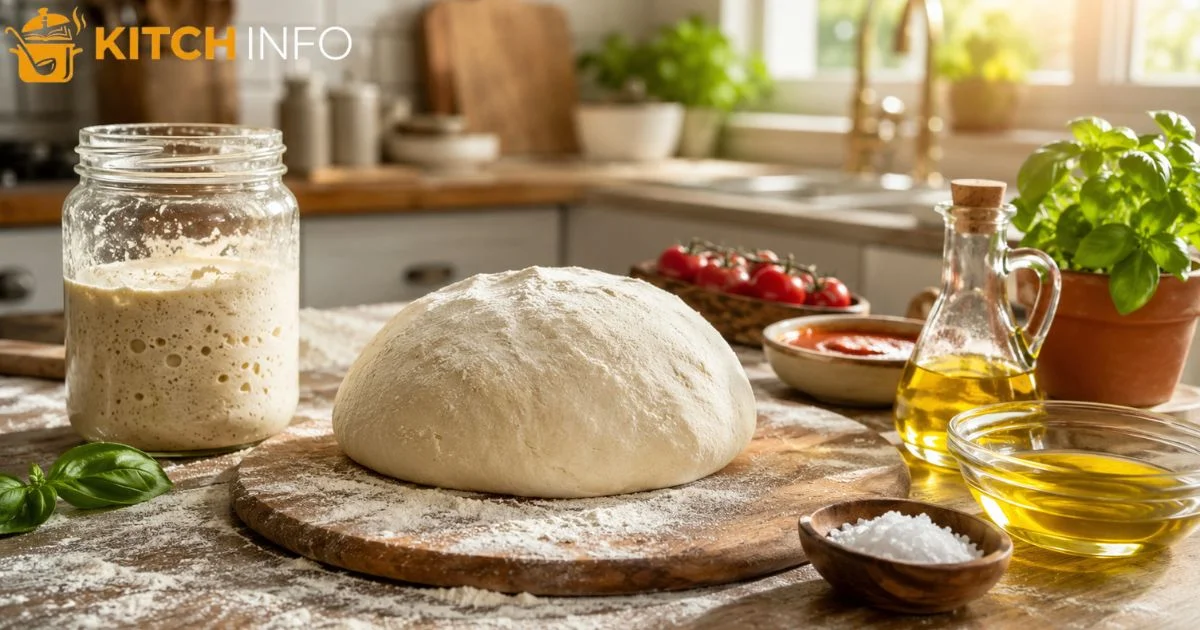
If you want fresh, flavorful pizza without waiting overnight, this same day sourdough pizza dough recipe is the perfect choice. This easy same day sourdough pizza dough recipe uses an active starter to create a delicious sourdough pizza with a light, airy texture and incredible flavor in just one day. Unlike traditional recipes, this same day sourdough pizza dough recipe delivers a crisp pizza crust while keeping the inside soft and chewy. Whether you are making homemade pizza for a family dinner or a weekend gathering, this simple pizza dough recipe helps you achieve bakery quality results at home using natural leavening and a healthy sourdough starter.
Same Day Sourdough Pizza Dough Recipe
Making great pizza at home does not have to take days of planning. This same day sourdough pizza dough recipe is perfect for anyone who wants fresh pizza with amazing flavor without waiting overnight. With the right timing and a healthy starter, you can enjoy a light, crisp, and flavorful pizza by dinner. The process is simple enough for beginners while delivering results that even experienced home bakers will appreciate.
Unlike traditional recipes that rely heavily on commercial yeast, this method uses a sourdough starter to create a naturally rich flavor. The dough develops a balanced taste that is mild, fresh, and slightly tangy. It also bakes into a crust that has beautiful color and texture.
One of the biggest advantages of this recipe is that it fits into a normal day. You can mix the dough in the morning, let it develop throughout the day, shape it in the evening, and enjoy freshly baked pizza with your family. There is no need to wait overnight to make delicious homemade pizza.
This guide explains everything you need to know, from choosing the right ingredients to preparing the dough, shaping it correctly, and getting it ready for baking. By understanding each step, you will build confidence and make better pizza every time.
Why You’ll Love This Recipe
There are many reasons why this recipe stands out from other pizza recipes. It combines convenience with excellent flavor while keeping the ingredient list simple.
Ready in One Day
Many sourdough recipes require long resting periods that can stretch over two or three days. This recipe shortens the timeline while still giving the dough enough time to develop flavor and structure.
That makes it perfect for busy weekdays, weekend family dinners, or last minute pizza nights.
Naturally Rich Flavor
This recipe creates a wonderful naturally leavened pizza dough that develops deep flavor through slow fermentation instead of relying on large amounts of commercial yeast.
The finished crust tastes fresh, balanced, and complex without being overly sour.
Soft Inside With Crisp Edges
A good pizza should have texture in every bite. This dough creates an excellent balance between a light interior and crisp outer edges.
The inside stays tender while the outside becomes beautifully golden during baking.
Easy for Beginners
You do not need years of baking experience to make great pizza. Every step in this guide is written in a simple way that is easy to follow.
Once you make it once or twice, the entire process becomes very natural.
Flexible for Different Styles
Whether you enjoy thin crust pizza or something slightly thicker, this dough can easily be adjusted during shaping.
It also works well for family dinners, parties, or individual pizzas.
Better Than Many Restaurant Pizzas
Fresh dough made at home often produces better results than frozen dough from the grocery store.
Because you control every ingredient, the final pizza tastes cleaner and fresher.
Budget Friendly
Making pizza at home costs much less than ordering takeout. With a few pantry staples and your starter, you can prepare several pizzas for a fraction of restaurant prices.
Great Learning Experience
Every batch teaches you something new about fermentation, dough handling, and baking.
As your confidence grows, your pizzas become even better.
Ingredients You’ll Need

One reason this recipe is so popular is that it uses simple ingredients found in most American kitchens. Each ingredient has an important job, so understanding why it is included helps you make better pizza.
Flour
Good flour forms the structure of the dough.
Many home bakers use all purpose flour because it is easy to find and creates excellent results. It produces a dough that is easy to mix and shape while still baking into a flavorful crust.
Starter
The most important ingredient is your active starter.
It should be bubbly, well fed, and full of life before mixing the dough. A weak starter can slow fermentation and reduce oven spring.
Many bakers also refer to this as a mature starter because it has been maintained over time and has developed a stable balance of yeast and beneficial bacteria.
A ripe starter should have expanded well after feeding and still be near its peak when added to the dough.
Most home bakers keep a 100% hydration starter, which means equal weights of flour and water. This consistency makes recipes easier to follow and produces reliable results.
Water
Use warm water instead of cold water.
Slightly warm water helps wake up the microorganisms inside the starter and encourages healthy fermentation.
Very hot water should always be avoided because it can damage the natural yeast.
Salt
A good quality sea salt improves flavor while strengthening gluten.
Salt also helps regulate fermentation so the dough develops at a steady pace.
Oil
A small amount of olive oil gives the dough extra tenderness.
It also helps improve browning during baking and makes the finished crust more enjoyable to eat.
Understanding Ingredient Balance
Professional bakers often calculate recipes using baker’s percentage instead of measuring by cups.
This method compares every ingredient to the total flour weight, making recipes easy to scale for larger or smaller batches.
Dough Hydration
The amount of water compared to flour determines dough hydration.
Higher hydration usually creates a lighter interior with more air pockets, while lower hydration produces a firmer dough that is easier for beginners to handle.
For this recipe, the hydration level strikes a balance between easy handling and excellent texture.
Equipment You’ll Need
You do not need an expensive pizza oven to make amazing pizza at home.
Most of the equipment is already available in a standard kitchen.
Large Mixing Bowl
A roomy bowl makes mixing easier and gives the dough enough space to expand during fermentation.
Kitchen Scale
A digital scale provides much more accurate measurements than cups.
Consistent measurements lead to consistent pizza every time.
Dough Scraper
A dough scraper helps lift and fold sticky dough without tearing it.
It also makes cleaning the work surface much easier.
Thermometer
Checking the dough temperature helps ensure fermentation stays on schedule.
Professional bakers often monitor the final dough temperature because it strongly influences how quickly the dough develops.
Bowl for Rising
After mixing, place the dough into a lightly oiled bowl.
The thin coating of oil prevents sticking and makes removing the dough much easier later.
Pizza Peel
A pizza peel allows you to move the pizza safely into the hot oven.
Wooden peels work well for launching while metal peels are excellent for removing finished pizzas.
Baking Surface
Many home bakers prefer either a baking stone or a baking steel.
Both create intense bottom heat that helps the crust cook evenly and develop excellent color.
Parchment
Some beginners feel more comfortable using parchment paper while learning to transfer pizza.
It makes handling easier and reduces sticking.
How to Make the Dough
Making excellent pizza starts long before baking. Every stage contributes to the final flavor and texture.
Step One
Feed your starter several hours before mixing.
Wait until it becomes bubbly, active, and nearly doubled in size.
Healthy fermentation begins with a strong starter.
Step Two
Combine the flour, water, starter, salt, and oil in a large bowl.
Mix until no dry flour remains.
The dough will look rough at first, but that is completely normal.
Step Three
Allow the dough to rest for a short period.
This rest gives the flour time to absorb moisture, making the dough smoother and easier to work with.
Step Four
Begin gentle folds instead of heavy kneading.
Lift one side of the dough and fold it toward the center.
Repeat from different directions until the dough becomes stronger.
Step Five
Place the bowl in a warm place where the dough can rise steadily.
Avoid locations with cold drafts or sudden temperature changes.
Step Six
During bulk fermentation, the dough slowly develops flavor, strength, and structure.
This stage is one of the most important parts of the recipe.
Watching the Dough
Instead of watching the clock, watch the dough itself.
Healthy dough fermentation causes the dough to become smoother, lighter, and slightly puffed.
You may notice small bubbles forming beneath the surface.
These are good signs that fermentation is progressing well.
Understanding the Rise
The dough rise should be noticeable but not excessive.
If the dough doubles too quickly, it may become difficult to shape later.
A gradual rise generally produces better flavor and structure.
Dividing the Dough
Once fermentation is complete, gently divide the dough into equal portions.
These become your dough balls.
Each portion should be handled carefully to preserve the air developed during fermentation.
After shaping, allow the pizza dough balls to rest before stretching.
This relaxation makes shaping much easier.
How to Shape Pizza Dough

Proper shaping is one of the biggest differences between average pizza and exceptional pizza.
The goal is to keep as much trapped air inside the dough as possible.
Prepare the Work Area
Sprinkle a small amount of flour onto a floured surface.
Too much flour can make the dough dry, so use only enough to prevent sticking.
Shape the Dough
Gently shape the dough into a smooth round.
Avoid squeezing out the air that formed during fermentation.
Begin Forming the Crust
Use your fingertips to press your fingers into the center of the dough.
Work outward while leaving the outer edge untouched.
This creates the future edge of the crust.
Stretch Carefully
Now gently stretch the dough using your hands.
Allow gravity to help rather than forcing the dough.
If it resists stretching, let it rest briefly before trying again.
Final Shaping
Continue with final shaping until the dough reaches your desired size.
The center should be thinner while the outer edge remains slightly thicker.
This helps create a beautiful finished pizza.
Shape the Crust
As you finish, carefully shape the crust by maintaining a raised outer rim.
This edge expands nicely in the oven and creates an attractive appearance.
Best Pizza Toppings
Great dough deserves equally great toppings.
The best pizzas usually keep ingredients simple so every flavor can shine.
Prepare Everything Before Baking
Always prepare the sauce before stretching the dough.
Have all ingredients measured and ready to use.
Next, prepare toppings so assembly happens quickly.
Working efficiently helps prevent the dough from sticking.
Classic Choices
Fresh mozzarella, tomato sauce, basil, mushrooms, pepperoni, onions, bell peppers, sausage, olives, spinach, and roasted garlic are all excellent options.
Fresh herbs added after baking also bring bright flavor and color.
Less Is More
One common mistake is adding too many toppings.
A lighter layer allows the crust to bake properly while keeping every bite balanced.
Personal Preferences
This recipe works beautifully for family sized pizzas or personal pizzas.
Everyone can choose their favorite combination without affecting the quality of the dough.
With your ingredients prepared and the dough fully shaped, the next step is assembling the pizza and getting it ready for the oven, where careful baking techniques will transform it into a beautifully finished homemade meal.
Baking Tips for the Perfect Crust

Once your pizza is assembled, baking it correctly is just as important as making the dough. A hot oven and a few simple techniques can make a big difference.
Heat the Oven Thoroughly
Always preheat oven well before baking. A fully heated oven gives the dough an instant burst of heat, helping it rise quickly and develop better texture.
If you are using a stone, preheat pizza stone for at least 45 minutes so it stores enough heat.
Position Matters
Place the baking surface on the bottom rack if you want a crisp base. Some home bakers prefer the top stone position for stronger browning on the surface, depending on how their oven heats.
Learning how your own oven performs will help you get consistent results.
Transfer the Pizza Carefully
If you are using parchment, transfer to parchment paper before adding the sauce and cheese. This makes moving the pizza into the oven much easier.
Work quickly so the dough does not become soggy.
Finish With High Heat
If your oven has a broiler, turn it on during the final minute or two of baking. Watch the pizza closely to avoid burning.
This extra heat creates attractive color and gives the crust a more authentic finish.
Watch the Bake
Every oven is different, so bake time may vary slightly. Keep an eye on the pizza instead of relying only on the clock.
Halfway through baking, rotate pizza so it cooks evenly on all sides.
The goal is an even bake with a crisp bottom and nicely browned edges.
Know When It Is Done
A finished pizza should have dark brown spots around the outer edge with a little char in places.
Check the underside of the pizza to make sure it is fully browned and crisp before removing it from the oven.
The result should be a beautiful charred crust with plenty of flavor.
Common Mistakes to Avoid
Even simple recipes can produce disappointing results if a few basic mistakes are made.
One common mistake is using a starter before it reaches its peak. A weak starter slows fermentation and can leave the dough dense.
Another mistake is adding too much flour during shaping. Extra flour makes the dough stiff and can reduce the quality of the finished crust.
Rushing fermentation is another problem. Give the dough enough time to develop naturally. Trying to speed up the process usually leads to less flavor.
Many beginners also overload their pizzas with toppings. Too much sauce, cheese, or meat can prevent the crust from baking properly.
Opening the oven door too often lets valuable heat escape. Keep the door closed as much as possible during baking.
Finally, avoid cutting the pizza immediately after removing it from the oven. Let it rest for a minute or two so the cheese settles and the slices stay together.
Expert Tips for Better Results
Small improvements can take your homemade pizza from good to outstanding.
Always measure ingredients by weight whenever possible. This creates more consistent results from one batch to the next.
Handle the dough gently from start to finish. Preserving the air inside helps create an open crumb with a light interior.
A properly fermented dough also develops a pleasant chewy crumb that many pizza lovers enjoy.
Bake at the highest safe temperature your home oven allows. Higher heat produces a better crispy crust while keeping the inside soft.
A small amount of oil in the dough also helps create a tender crust without making it heavy.
Do not be afraid to practice. Every batch teaches you something new about timing, shaping, and baking. After a few attempts, your results become much more predictable.
Storage and Reheating
If you have leftover dough, place it in an airtight container and refrigerate it for up to two days.
Before using chilled dough, allow it to come closer to room temperature so it becomes easier to stretch.
Leftover baked pizza can also be refrigerated in a sealed container for several days.
For the best texture, reheat slices in a skillet over medium heat or in a hot oven. These methods help restore a crisp exterior while warming the toppings evenly.
Avoid reheating pizza in the microwave if possible, since it often makes the crust soft and chewy.
Recipe Variations
This recipe is easy to customize based on your family’s preferences.
Use bread flour if you prefer a slightly stronger crust with extra chew.
For a softer texture, replace a small portion of the flour with whole wheat flour. This also adds a mild nutty flavor.
You can divide the dough into smaller portions for individual pizzas during family gatherings.
If you are short on time, a very small amount of instant yeast can be added to support fermentation while still allowing the starter to contribute most of the flavor.
You can also experiment with different cheeses, seasonal vegetables, grilled chicken, or fresh herbs to create unique combinations throughout the year.
Frequently Asked Questions
Can I make this dough ahead of time?
Yes. After the initial rise, refrigerate the dough and use it within a couple of days for excellent flavor.
Why did my dough not rise well?
The most common reason is a starter that was not fully active. Cool room temperatures can also slow fermentation.
Can I freeze the dough?
Yes. Divide the dough into portions, wrap each one well, and freeze. Thaw overnight in the refrigerator before using.
What is the best flour for beginners?
A good quality all purpose flour is an excellent choice because it is easy to find and produces reliable results.
Can I cook this without a pizza stone?
Absolutely. A baking steel, heavy baking tray, or cast iron pan can also produce excellent homemade results.
Why is my crust pale?
The oven may not have been hot enough, or the baking surface may not have been fully preheated before baking.
Can children help make this recipe?
Yes. Kids often enjoy mixing the dough, adding sauce, sprinkling cheese, and choosing their favorite toppings with adult supervision.
Final Thoughts
A great pizza dough recipe does not have to be complicated. By starting with a healthy starter, using quality ingredients, and following each step carefully, you can create an outstanding sourdough pizza at home in a single day.
This method combines natural leavening with practical timing, making it ideal for busy households that still want fresh, flavorful meals. The finished pizza crust offers a wonderful balance of a crispy outside, a soft interior, and a delicious flavor that is hard to match with store bought dough.
Whether you are making a simple weeknight dinner or serving guests on the weekend, this recipe gives you the confidence to create memorable homemade pizza crust every time. With a little practice and attention to detail, your pizza baking skills will continue to improve, and each batch will become even better than the last.

Muhammad Ali writes about baking and recipes at kitchinfo. He researches techniques from trusted bakers, cookbooks, and culinary experts, and turns them into clear, step-by-step guides . so bakers of every skill level can get great results without the confusion.