

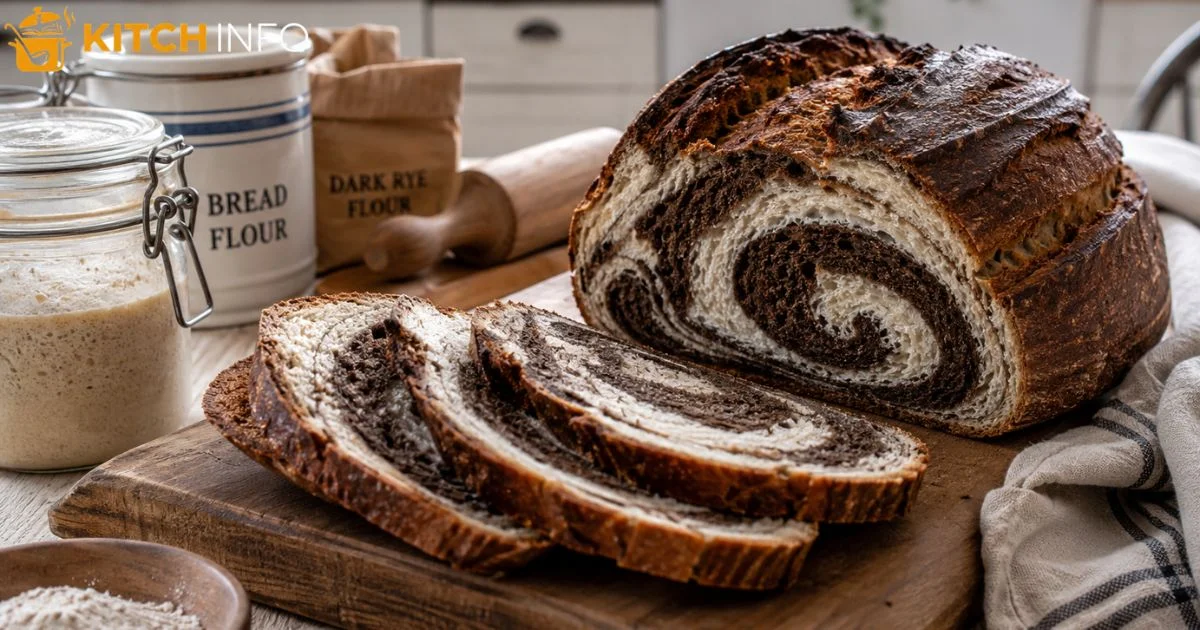
If you are looking for a bakery quality sourdough marble rye bread recipe, this guide will help you create a flavorful loaf with a beautiful swirl and a soft texture right in your own kitchen. This sourdough marble rye bread recipe combines the rich taste of rye sourdough with the classic look of marble rye bread, making it perfect for everyday meals and special occasions alike. Made with an active sourdough starter, quality rye flour, and simple pantry ingredients, this homemade rye bread delivers the authentic taste of naturally leavened bread. Whether you enjoy it fresh, toasted, or served as sandwiches, this sourdough marble rye bread recipe is sure to become a favorite.
What Is a Sourdough Marble Rye Bread Recipe?
A sourdough marble rye bread combines two separate doughs into one loaf. One dough stays light in color while the other becomes dark with natural coloring ingredients. The two doughs are gently rolled, layered, and shaped together before baking, creating the familiar marble effect seen in bakery style bread.
Unlike commercial versions that rely on instant yeast, this recipe uses a sourdough starter as the only leavening agent. The slow fermentation creates a richer flavor, better texture, and a loaf that stays fresh longer than many quick breads.
Traditional marble rye bread has long been popular in American delis because it pairs well with many savory fillings. The combination of mild wheat flavor and earthy rye gives every bite a balanced taste that is both familiar and unique.
What Makes It Different From Regular Rye Bread?
Many people think all rye loaves are the same, but there are important differences.
A standard rye bread often has one uniform color and flavor throughout the loaf. A marble version is made from two contrasting doughs that are carefully combined before proofing. The final slices reveal beautiful ribbons running across the crumb.
The natural fermentation also changes the character of the bread. Instead of depending on commercial yeast, the dough rises slowly, allowing flavor to develop over time.
The Role of Natural Fermentation
The heart of this recipe is sourdough bread made through slow fermentation. Wild yeast and beneficial bacteria work together to create carbon dioxide that lifts the dough while producing pleasant acidity.
As the dough ferments, naturally occurring organic acids improve flavor while helping strengthen the dough. These acids also contribute to keeping the loaf fresh for a longer period after baking.
The longer timeline allows more complex aromas to develop, giving the finished loaf far more depth than quickly risen breads.
Why Rye Flour Changes Everything
The flavor of rye flour is one of the defining features of this loaf. It has a slightly earthy, mildly nutty taste that makes every slice more interesting than plain white bread.
Unlike wheat, rye contains proteins called secalins instead of large amounts of gluten forming proteins. Because of this, rye dough behaves differently during mixing and shaping.
Another important component is pentosans, natural compounds that absorb significant amounts of water. They influence dough consistency and help hold moisture in the finished loaf.
Understanding the Science Behind Rye
Baking with rye is different because of its unique chemistry.
In wheat based doughs, proteins known as glutenin and gliadin combine to create a strong gluten network. Rye develops much less of this structure, which is why bakers often combine it with wheat based flour for better handling.
Rye also has higher amylase activity, meaning enzymes break starches into sugars more quickly. During proper fermentation, balanced acidity helps control this enzymatic activity, improving starch stability and preventing excessive starch breakdown.
When the loaf enters the oven, starch gelatinization helps set the internal structure so the bread slices cleanly once cooled.
Why You’ll Love This Sourdough Marble Rye Bread Recipe
This recipe offers much more than a beautiful appearance. Every stage has been carefully balanced to give dependable results while remaining approachable for home bakers.
Beautiful Bakery Style Appearance
The first thing people notice is the dramatic swirl inside each slice.
A carefully created swirl pattern gives every loaf its own personality. Since no two loaves are rolled exactly the same way, every bake produces a unique design.
The goal is not perfection but a balanced clean swirl with visible curves between the two doughs.
Rich Flavor Without Artificial Ingredients
Slow fermentation creates a naturally complex taste.
The rye contributes its distinctive rye flavor, while the sourdough culture adds gentle tanginess without becoming overpowering.
The result closely resembles a classic marble rye found in quality bakeries, but with an even fresher taste.
Perfect for Everyday Meals
This loaf works well throughout the day.
It makes excellent sandwich bread because the slices stay sturdy without falling apart.
It is equally delicious toasted with butter or served alongside soups and salads.
Soft Interior With Great Texture
A properly fermented loaf develops a pleasant soft crumb while maintaining enough strength for slicing.
The outside forms a thin crust that adds just enough bite without becoming overly hard.
When baked correctly, the loaf has an attractive crumb with evenly distributed air pockets.
Excellent Freshness
Natural fermentation helps improve moisture retention, allowing the bread to stay enjoyable for several days.
Instead of drying out quickly, each slice remains flavorful and tender when stored properly.
Ingredients for Sourdough Marble Rye Bread Recipe

Good bread begins with quality ingredients. Each one has a specific purpose, and understanding those roles makes it easier to produce consistent results.
Flour Selection
This recipe uses several types of flour to create balanced flavor and structure.
Bread flour provides strength because of its higher protein content.
A small amount of wheat flour contributes additional support while keeping the dough manageable.
Some bakers also include all purpose flour depending on the desired texture and available ingredients.
Choosing the right flour ratio is important because too much rye can make the dough difficult to handle, while too little reduces the traditional flavor.
Mature Starter
A healthy mature sourdough starter should be bubbly, active, and able to double in size after feeding.
An active culture creates reliable fermentation and helps produce a lighter loaf with better flavor.
Liquid Ingredients
Fresh water controls the overall hydration of the dough.
A small amount of molasses gives the darker dough a deeper color and mild sweetness that complements the rye.
Some recipes also include honey for subtle sweetness and additional browning.
Fat and Seasoning
A little butter softens the finished loaf and contributes richness.
Salt strengthens dough while balancing flavor during fermentation.
Flavoring Ingredients
Many traditional recipes include caraway seeds for their unmistakable aroma.
The darker dough often contains dark cocoa powder, which deepens the color without making the bread taste like chocolate.
Equipment You Will Need
Simple tools make the process much easier.
A digital kitchen scale provides accurate measurements that improve consistency.
A rolling pin helps flatten the dough evenly before layering.
Many home bakers choose a loaf pan or another suitable baking pan to support the dough during the final rise.
A sheet of parchment paper also makes cleanup easier and prevents sticking.
How to Make Sourdough Marble Rye Bread Step by Step

Making this loaf is easier when each stage is completed carefully. The process focuses on steady fermentation, gentle handling, and thoughtful shaping.
Step One Prepare the Doughs
Begin by mixing separate light and dark doughs.
The light dough remains simple while the dark dough receives cocoa and molasses for color.
Both doughs should reach a similar hydration level so they rise at nearly the same speed.
Matching the consistency helps create even layers later in the process.
Step Two Build Dough Strength
After mixing, allow time for proper gluten development.
As mixing continues, the gluten network becomes stronger, improving the dough’s ability to trap gas.
Good dough strength is important because it supports the loaf throughout fermentation and baking.
Step Three Bulk Fermentation
Transfer both doughs to lightly oiled containers for bulk fermentation.
During this stage, yeast and bacteria produce gas while strengthening flavor.
Watch the dough rather than the clock because room conditions influence fermentation speed.
Successful sourdough fermentation depends on temperature, starter activity, and dough composition.
Step Four Monitor the Dough
Instead of relying only on timing, observe visual cues.
Proper dough readiness includes noticeable expansion, a smoother surface, and a dough that feels lively when gently touched.
A well fermented dough becomes aerated dough with visible gas bubbles inside.
It should also feel like resilient dough, holding its shape while remaining soft.
Step Five Roll and Layer
Place each dough onto a lightly floured surface.
Begin rolling the dough into similar sized rectangles.
Next comes layering the dough by placing one sheet directly over the other.
Careful dough layering helps create a perfect swirl after shaping.
Step Six Shape the Loaf
Now begin shaping the dough into a tight cylinder.
Keep enough surface tension on the outside to encourage good oven expansion later.
Place the shaped loaf seam side down inside the prepared pan.
This helps the loaf maintain its shape during proofing.
Step Seven Final Proof
Allow the loaf to complete its final proof at a comfortable room temperature.
Proper proofing gives the dough time to expand before entering the oven.
Avoid overproofing, which weakens structure and reduces oven rise.
Likewise, underproofing can lead to dense bread with uneven expansion.
Step Eight Bake the Bread
Preheat the oven thoroughly before baking.
Introducing steam during the early part of baking keeps the surface flexible so the loaf can continue expanding.
Good oven spring produces increased height and a lighter interior.
Maintain the recommended oven temperature throughout the bake for consistent results.
The loaf is fully baked when the internal temperature reaches the proper range for bread.
Step Nine Cool Before Slicing
Allow the loaf to cool completely before cutting.
Cooling allows the internal structure to finish setting, making cleaner slices possible.
Cutting too early can create a gummy crumb because moisture has not yet redistributed.
When everything goes well, the bread develops an airy crumb with attractive definition between the two colors.
Best Flour Ratio for Sourdough Marble Rye Bread
Choosing the right balance of flours has one of the biggest impacts on the finished loaf. The ratio determines flavor, structure, handling, and overall appearance.
Why Balance Matters
Using too much rye creates a very sticky dough that can be difficult to shape.
Using too little rye produces a loaf that tastes more like standard wheat bread than traditional rye sourdough.
The ideal balance preserves the familiar deli flavor while maintaining reliable dough performance.
Protein Supports Structure
Higher wheat protein levels improve the loaf’s ability to trap fermentation gases.
This provides better dough expansion, increased volume, and improved slicing after cooling.
Strong protein also contributes to better structural compatibility between the light and dark doughs.
Finding the Right Rye Percentage
A moderate rye percentage allows the bread to keep its traditional flavor without sacrificing handling.
Most home bakers find that a balanced combination produces dependable results while remaining beginner friendly.
The exact amount can be adjusted slightly based on personal preference, but dramatic increases often require more advanced techniques.
Keeping Hydration Balanced
Proper balanced hydration keeps both doughs rising at similar rates.
If one dough becomes much wetter than the other, the finished loaf may lose its attractive pattern.
Matching consistency also makes shaping much easier and improves the final appearance.
Dough Handling Tips
Rye dough often feels softer than expected.
A slightly sticky dough is completely normal, but excessive flour during shaping can reduce the contrast between layers.
Gentle dough handling preserves the gas created during fermentation while protecting the internal structure.
With the flour balance established and both doughs behaving consistently, the next stage focuses on refining the loaf even further through advanced shaping, baking techniques, storage methods, and practical troubleshooting for consistently excellent results.
Expert Tips for Perfect Sourdough Marble Rye Bread
Small details can make a big difference when baking this loaf. These practical tips help create better flavor, a more attractive appearance, and reliable results every time.
Feed Your Starter Consistently
A healthy starter is the foundation of great bread. Feed it on a regular schedule so it is active before mixing your dough.
If your starter has been stored in the refrigerator, give it a couple of feedings before baking. This helps improve rising power and overall flavor.
Match Both Doughs Carefully
The light and dark portions should feel almost the same when you touch them.
If one dough is much softer than the other, they may rise at different speeds. That can affect the final shape and make the pattern less even.
Be Gentle During Shaping
Handle the dough with care once it has risen.
Pressing too hard removes the air that developed during fermentation. A gentle touch helps the loaf stay light and gives better volume after baking.
Do Not Rush the Process
Natural bread rewards patience.
Allow enough time for each stage instead of trying to speed things up with extra warmth. Slow development creates better flavor and a more even texture.
Slice Only After Cooling
Fresh bread smells wonderful, but waiting is important.
A fully cooled loaf cuts into neat slices and keeps its texture much better than bread sliced while still hot.
Common Mistakes When Making Sourdough Marble Rye Bread

Even experienced home bakers sometimes run into problems. Knowing what to watch for makes it much easier to avoid disappointment.
Using a Weak Starter
A sluggish starter often produces slow rising dough and a heavy loaf.
If your starter does not become bubbly after feeding, refresh it several times before baking.
Measuring Ingredients Inaccurately
Bread depends on consistency.
Using too much flour or too much liquid can change the dough completely. Measuring by weight is usually the most dependable method.
Mixing the Dough Too Little
Proper mixing helps build strength before fermentation begins.
Stopping too early may leave the dough weak, while excessive mixing can make it harder to handle.
Creating an Uneven Roll
Rolling one section much thicker than the other can produce an uneven pattern inside the loaf.
Take your time and keep both pieces close to the same size before combining them.
Baking Too Soon
A loaf that goes into the oven before it is ready may split unevenly or remain dense inside.
Watching the dough instead of the clock usually gives better results.
Cutting Into Warm Bread
It is tempting to enjoy fresh bread immediately, but slicing too early often causes the interior to become compressed.
Waiting until the loaf is completely cool gives cleaner slices and a better eating experience.
Variations of Sourdough Marble Rye Bread Recipe
Once you are comfortable with the basic recipe, there are several ways to customize it while keeping the same beautiful appearance.
Traditional Deli Style Version
A classic version focuses on balanced rye flavor with a mild tang from natural fermentation.
It pairs especially well with corned beef, pastrami, turkey, roast beef, or Swiss cheese.
Mild Family Friendly Version
If someone prefers a gentler rye flavor, reduce the amount of rye slightly while keeping the same overall method.
This creates a loaf that appeals to both children and adults.
Seeded Version
Additional seeds can be mixed into one or both doughs for extra texture.
Keep the amount moderate so the dough remains easy to shape.
Slightly Sweeter Version
A little more natural sweetener can soften the earthy flavor of rye without overpowering it.
This variation works well for breakfast toast or simple buttered slices.
Rustic Free Form Loaf
Instead of baking in a pan, shape the dough into a free standing loaf.
This creates a more rustic appearance with a slightly thicker exterior.
How to Store Sourdough Marble Rye Bread

Proper storage helps preserve flavor and texture while reducing waste.
At Room Temperature
Once completely cool, place the loaf in a bread box or wrap it well.
Avoid storing fresh bread in the refrigerator because it tends to dry out faster.
Freezing for Longer Storage
If you will not finish the loaf within a few days, slice it before freezing.
Place the slices into a freezer safe bag with as much air removed as possible.
Frozen slices can be taken out one at a time, making them convenient for busy mornings.
Thawing the Bread
Allow frozen slices to thaw naturally at room temperature or warm them in a toaster.
This helps preserve flavor and texture without making the bread soggy.
FAQs
Is this recipe suitable for beginners?
Yes. While natural fermentation takes time, each step is simple when followed carefully. Patience is more important than advanced baking skills.
Why is my loaf heavy?
A heavy loaf is often caused by an inactive starter, inaccurate measurements, or insufficient rising time before baking.
Can I make the dough ahead of time?
Yes. Many home bakers refrigerate the dough overnight after the first rise. This can make scheduling easier while also allowing flavor to continue developing.
Why did my swirl disappear?
The layers may have been rolled too tightly or blended together during shaping. Keeping the two doughs even and handling them gently helps preserve the design.
Can I bake this recipe without a pan?
Yes. A free form loaf can be baked on a baking sheet or baking stone if it is shaped tightly enough to hold its form.
What foods pair well with this bread?
It is excellent with deli meats, cheese, soups, eggs, smoked fish, grilled vegetables, and simple spreads like cream cheese or butter.
How long does homemade marble rye stay fresh?
When stored properly at room temperature, it usually tastes best within several days. Freezing extends its quality for much longer.
Conclusion
Making sourdough marble rye bread at home is both rewarding and enjoyable. The combination of natural fermentation, rich rye flavor, and the beautiful marbled interior creates a loaf that looks impressive while delivering outstanding taste.
By choosing quality ingredients, giving the dough enough time to develop, and paying attention to each step, you can bake bread that rivals the best neighborhood bakery. The process becomes easier with every loaf, and each bake offers another opportunity to improve your technique.
Whether you are preparing hearty sandwiches, serving warm slices with dinner, or enjoying toast for breakfast, this homemade loaf brings fresh flavor and craftsmanship to your table. With practice and patience, this recipe can become a trusted favorite that you will return to again and again.

Muhammad Ali writes about baking and recipes at kitchinfo. He researches techniques from trusted bakers, cookbooks, and culinary experts, and turns them into clear, step-by-step guides . so bakers of every skill level can get great results without the confusion.